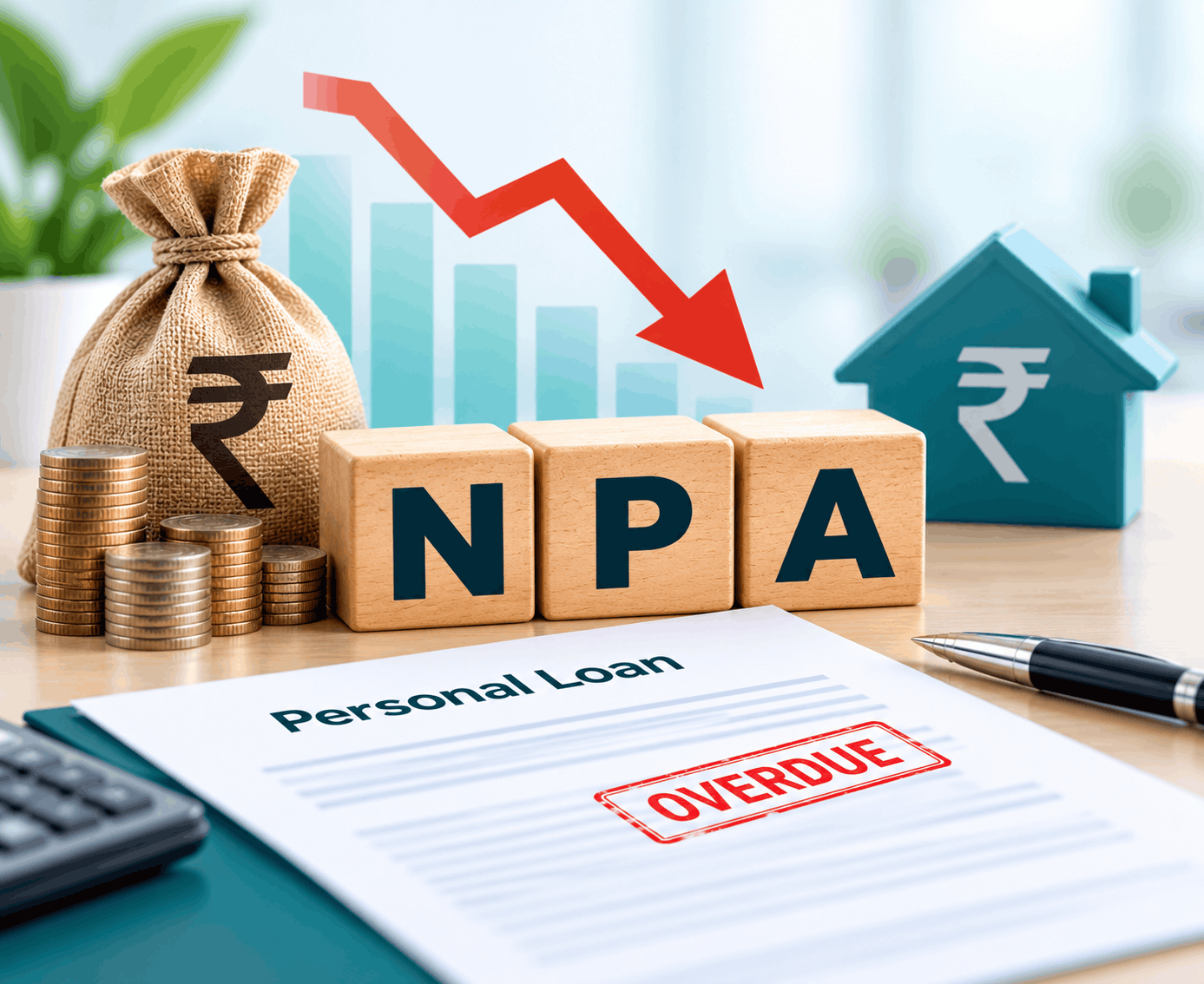
When people struggle with multiple loan EMIs, overdue credit card bills or outstanding personal loans, they often search for a way to settle their existing debt.
During this search, they may come across terms such as settlement loan, loan settlement, debt consolidation loan and one-time settlement (OTS).
Although these terms sound similar, they describe different financial arrangements. Understanding the difference is important because choosing the wrong option can increase your financial burden instead of reducing it.
For example, taking a new personal loan to pay an existing settlement amount may create another repayment obligation. Similarly, negotiating with a bank to accept a reduced amount against an outstanding loan is not the same as borrowing money.
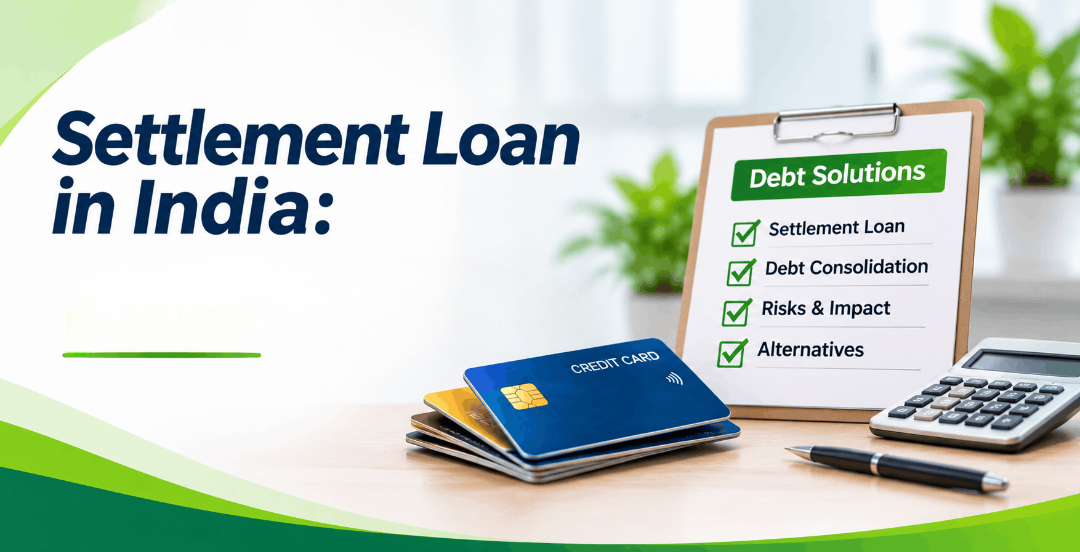
In this guide, we explain what a settlement loan means in India, how it differs from debt settlement and debt consolidation, the risks involved and the alternatives borrowers should consider before making a financial decision.
What Is a Settlement Loan?
The expression "settlement loan" is commonly used to describe two different financial situations.
1. A new loan taken to pay existing outstanding debt
A borrower may take a fresh personal loan to arrange funds for paying overdue loan or credit card dues. The new loan comes with its own interest rate, repayment period, processing fees and EMI obligations.
2. A negotiated settlement of an existing loan
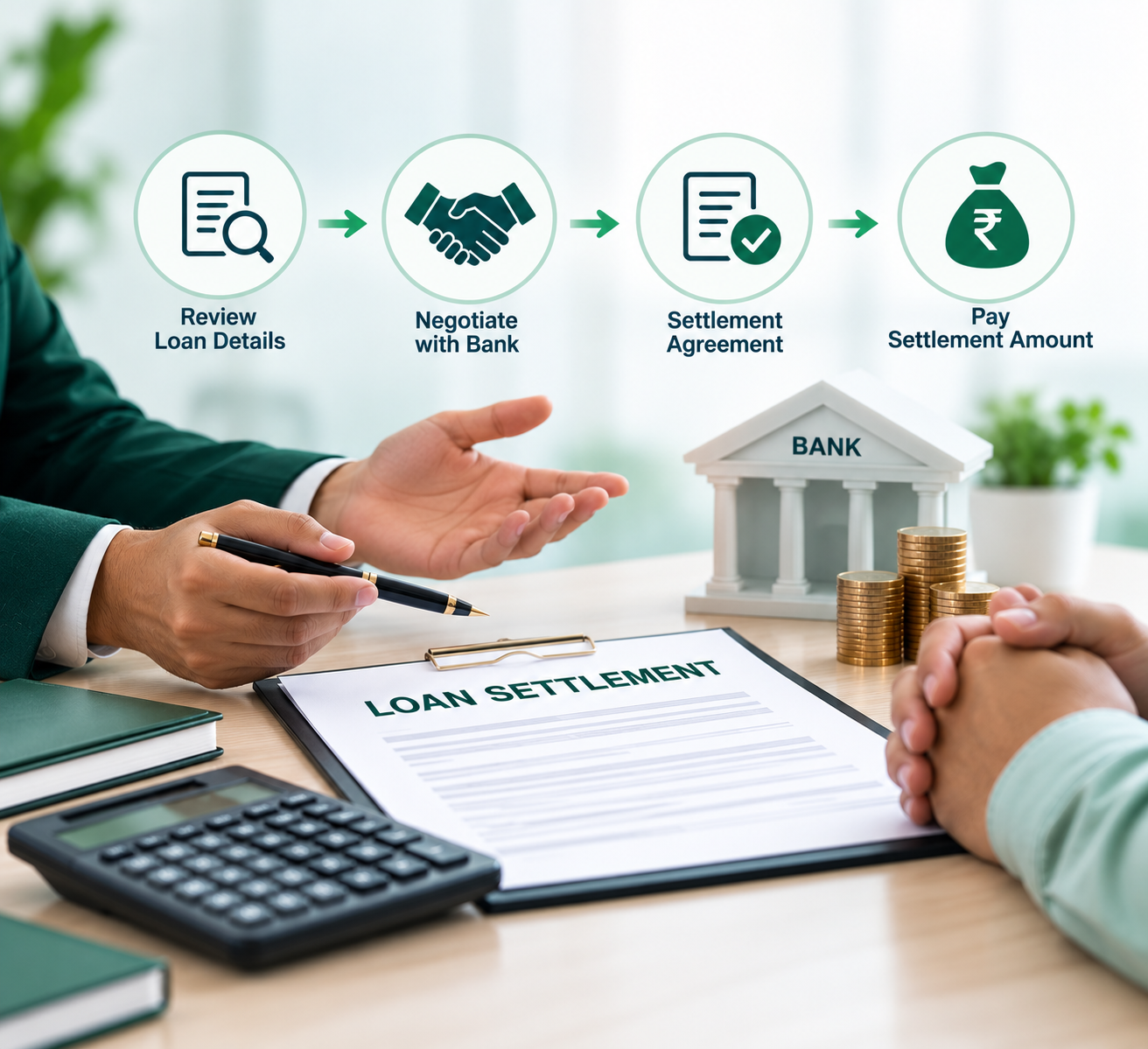
In this situation, the borrower approaches the existing lender to discuss whether the outstanding account can be resolved by paying an agreed amount that may be lower than the total dues.
This is known as loan settlement or compromise settlement. It is not a new loan.
These two arrangements should never be confused. One involves borrowing additional money, while the other involves negotiating the resolution of an existing debt.
What Is the Difference Between Loan Settlement and Debt Consolidation?
Loan settlement and debt consolidation are two different approaches to managing financial obligations.
Loan Settlement
Loan settlement is a negotiated arrangement between a borrower and lender to resolve an outstanding debt for an agreed amount.
Under certain circumstances, the lender may agree to accept less than the full amount due, subject to its policies and approval.
This option may be considered when a borrower is experiencing serious financial hardship and cannot realistically repay the entire outstanding amount.
Debt Consolidation
Debt consolidation involves combining multiple eligible debts into a single repayment facility.
For example, a person managing three different loan EMIs and two credit card balances may explore a consolidation loan to replace those obligations with one new loan.
The objective is to simplify repayment and potentially reduce the overall borrowing cost or monthly EMI.
However, consolidation is still borrowing. The borrower must evaluate the interest rate, processing fees, tenure and total repayment amount before accepting the new loan.
Settlement Loan vs Loan Settlement vs Debt Consolidation
|
Feature |
New Loan for Settlement Payment |
Loan Settlement |
Debt Consolidation |
|
Meaning |
Borrow money to fund an existing debt payment |
Negotiate an existing debt |
Combine multiple debts |
|
New loan created |
Yes |
No |
Yes |
|
New EMI |
Yes |
Not necessarily |
Yes |
|
Existing debt |
Intended to be paid using borrowed funds |
Resolved under agreed terms |
Replaced or repaid through consolidation |
|
Interest cost |
Depends on new loan |
Depends on original debt and agreement |
Depends on new loan |
|
CIBIL implications |
Depends on borrowing and repayment |
Settled status may be reported |
Depends on account closures and new repayment history |
|
Suitable situation |
Only when new borrowing is affordable and appropriate |
Genuine inability to repay in full |
Multiple debts with manageable repayment capacity |
The right option depends on your financial circumstances, not simply on which arrangement promises the lowest immediate payment.
Is Taking a New Loan to Pay a Settlement Amount a Good Idea?
Taking another loan to fund a negotiated settlement requires careful financial evaluation.
A settlement may reduce the amount you owe to your original lender, but borrowing money to make that payment can introduce a new financial obligation.
Consider this illustrative example.
Suppose a borrower has outstanding credit card dues of ₹2,00,000. After discussions, the lender agrees to accept ₹1,30,000 as a compromise settlement, subject to written terms and approval.
The borrower does not have the required amount available and considers taking a new personal loan to arrange the payment.
Now the borrower needs to repay the new loan, including its interest and applicable charges.
The actual financial benefit depends on the total cost of the new borrowing.
Illustrative Cost Comparison
|
Particulars |
Amount |
|
Original outstanding debt |
₹2,00,000 |
|
Hypothetical approved settlement amount |
₹1,30,000 |
|
New loan taken to fund settlement |
₹1,30,000 |
|
Interest and fees on new loan |
Depends on lender terms |
|
Total cost |
₹1,30,000 + borrowing costs |
The settlement amount alone does not represent the borrower's final financial cost.
Before accepting a new loan, calculate its total repayment amount and compare it with other available options.
Key takeaway: Do not evaluate a settlement-funded loan only by looking at the reduced amount offered by the original lender. Evaluate the complete cost of both financial arrangements.
Major Risks of Taking a New Loan to Pay Existing Debt
A new loan can sometimes help manage financial obligations, but it can also increase financial pressure when the borrower is already struggling with repayment.
Here are some important risks to consider.
1. You May Create Another Debt Obligation
If you take a new personal loan to fund an existing settlement amount, you still have to repay the new lender.
The original account may be resolved, but the financial obligation does not necessarily disappear.
2. Interest and Processing Charges Can Increase the Total Cost
A new loan may involve:
- Interest charges.
- Processing fees.
- Applicable taxes.
- Documentation charges.
- Other lender-approved fees.
These expenses should be included when calculating the actual cost of borrowing.
3. Your Monthly EMI May Become Difficult to Manage
If your income is already insufficient to manage existing expenses and loan payments, another EMI can create additional pressure.
Before accepting a loan, check whether the repayment fits comfortably within your realistic monthly budget.
4. You May Not Receive the Expected Settlement
A new lender approving a personal loan does not mean your existing bank has approved a settlement.
Always obtain the existing lender's written settlement approval before arranging funds specifically for that purpose.
5. Your Credit Profile May Still Be Affected
Paying an existing debt through a new loan does not automatically guarantee a favourable credit-report status.
The original lender's reporting, the new loan's repayment history and your overall credit profile all matter.
6. You May Enter Another Borrowing Cycle
Using fresh credit to manage previous borrowing without addressing the underlying income and expense imbalance can create a repeated cycle of debt.
This is why borrowers should examine their complete financial position before taking another loan.
How to Identify a Risky Settlement Loan Offer
Not every offer described as a settlement loan is necessarily fraudulent. However, borrowers should carefully verify the product, lender and terms before sharing personal information or paying money.
Watch out for these warning signs.
1. No Clear Lending Institution
If an offer promises settlement funding but does not clearly identify the actual lender, ask for complete details.
For a regulated lending arrangement, verify the identity and regulatory status of the lending institution.
2. Unexplained Upfront Payment Demands
Be cautious if someone asks you to transfer money to a personal account to unlock a loan, guarantee settlement or release funds.
Any legitimate fees should be clearly disclosed in the lender's documentation and verified through official channels.
3. Guaranteed Settlement Promises
No third party can independently guarantee that a bank will accept a particular settlement amount.
The existing lender makes the final decision under its applicable policies.
4. Pressure to Make an Immediate Decision
Be careful with messages claiming that you must pay immediately or lose a guaranteed settlement opportunity.
Take time to review the documents, payment instructions and total financial cost.
5. Unclear Loan Terms
Before accepting a new loan, understand the interest rate, annual percentage rate (APR), processing fees, repayment period, EMI and total amount payable.
For applicable regulated retail and MSME term loans, review the Key Facts Statement provided by the lender.
6. Guaranteed CIBIL Score Improvement
No company can guarantee a specific CIBIL score after a loan settlement or consolidation.
Credit scores depend on multiple factors, including repayment history, outstanding balances and credit utilisation.
What Are the Alternatives to a Settlement Loan?
Before taking another loan to manage existing debt, evaluate the following alternatives.
1. Negotiate Directly With Your Existing Lender
If you are experiencing genuine financial hardship, contact your existing bank or NBFC.
Explain your situation and ask about the repayment options available for your account.
Depending on the lender's policies and your circumstances, options may include revised repayment arrangements, restructuring or compromise settlement.
A compromise settlement is subject to lender approval and is not a borrower entitlement.
2. Explore Debt Consolidation
If you can still afford repayments but are struggling to manage several different EMIs, debt consolidation may be worth considering.
A consolidation loan may combine eligible outstanding debts into a single repayment facility.
Before proceeding, compare:
- Existing interest rates.
- New loan interest rate.
- Processing charges.
- Repayment tenure.
- Total interest payable.
- Monthly EMI.
- Prepayment or foreclosure conditions.
Do not assume consolidation is cheaper simply because the new EMI is lower. A longer repayment tenure can increase the total interest cost.
3. Consider Loan Restructuring
If your financial difficulty is temporary, ask the lender whether restructuring or another repayment adjustment is available.
The bank may evaluate your income, repayment history and account status before deciding.
Understand the revised repayment conditions and total cost before accepting.
4. Prepare a Debt Repayment Plan
If your income is sufficient to repay your outstanding obligations, a structured repayment plan may help.
Start by listing all your debts and identifying:
- Outstanding balances.
- Interest rates.
- Minimum payments.
- EMI due dates.
- Overdue amounts.
- Essential household expenses.
Prioritise essential expenses and create a realistic repayment budget.
5. Consider Debt Settlement When Full Repayment Is Genuinely Not Possible
If your financial circumstances make full repayment unrealistic, you may explore a negotiated settlement with the existing lender.
The lender may consider accepting an agreed amount to resolve the outstanding claim.
However, settlement can affect your credit history and should not be treated as an easy shortcut.
Understand the written terms, payment conditions and reporting implications before proceeding.
How Does Loan Settlement Affect Your CIBIL Score?
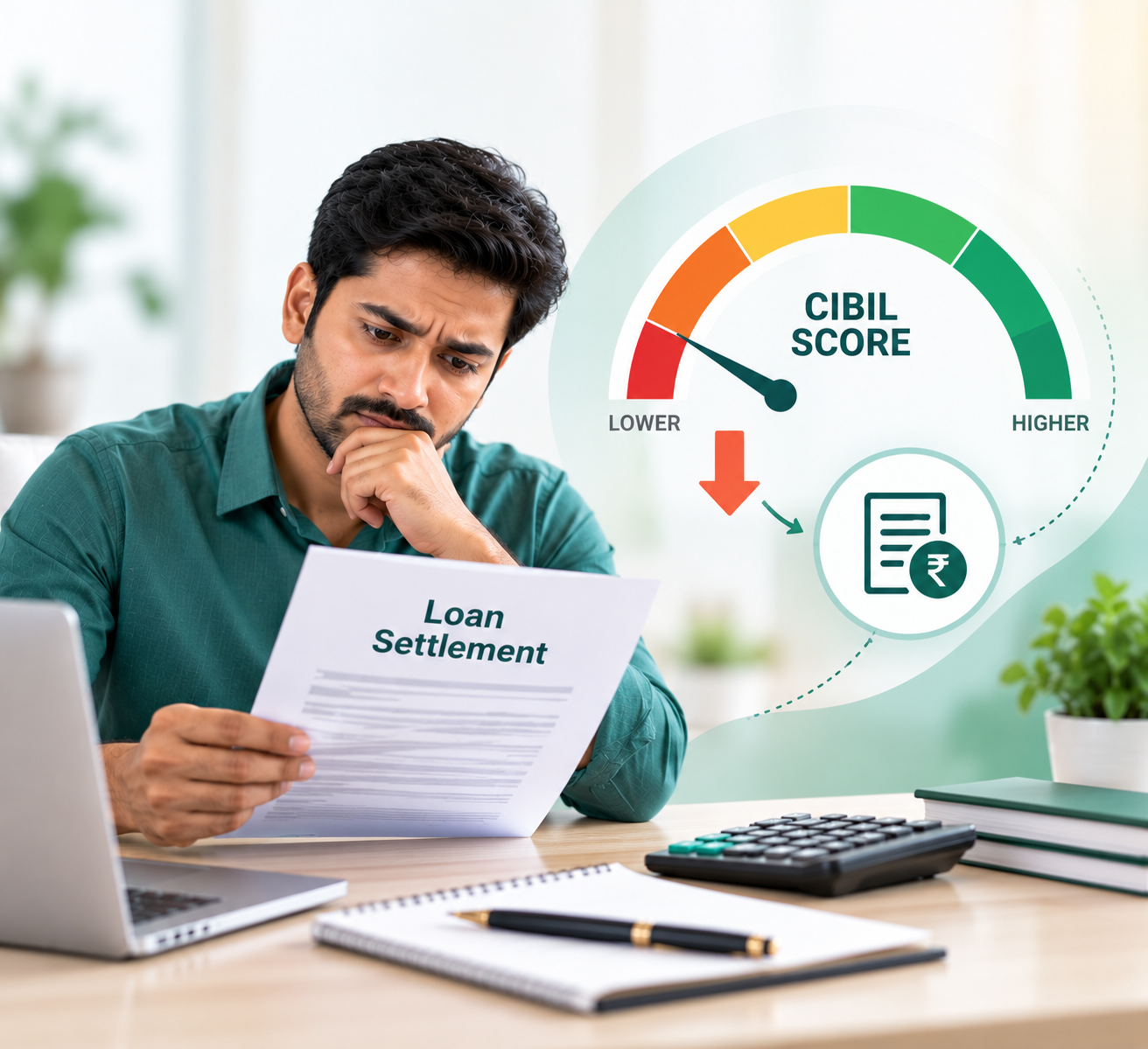
Loan settlement can negatively affect your credit profile.
When a lender accepts an amount lower than the full outstanding dues, the account may be reported as "Settled" rather than "Closed".
These statuses have different meanings.
Settled: The lender has accepted an agreed amount lower than the full outstanding obligation.
Closed: The full outstanding amount payable has been received and the account has been closed.
A settled account may be viewed less favourably by future lenders because it indicates that the original repayment obligation was not paid in full.
This may affect future applications for personal loans, credit cards or other borrowing facilities.
Can You Rebuild Your Credit Profile After Settlement?
Responsible financial behaviour can help improve credit health over time.
Consider the following practices:
- Keep your settlement confirmation and payment receipts.
- Review your credit reports regularly.
- Check that account information is reported correctly.
- Raise disputes if you find inaccurate information.
- Pay active loan EMIs on time.
- Avoid unnecessary credit applications.
- Maintain manageable credit utilisation.
There is no guaranteed score improvement or fixed recovery timeline after settlement.
What Should You Check Before Accepting Any Settlement-Related Loan?
Before accepting a financial offer, ask the provider the following questions.
Who is the actual lender?
Identify the institution providing the funds and verify its details.
Is this a new personal loan or a negotiated settlement?
Understand whether you are borrowing fresh money or discussing a resolution with your existing lender.
What is the complete cost?
Review the APR, interest, processing fees, taxes and total repayment amount.
Has the original lender approved the settlement?
Obtain written confirmation of the settlement amount and payment conditions before arranging a new loan specifically for that payment.
What happens to my credit report?
Understand how the existing account and any new loan will be reported.
Can I afford the new EMI?
Calculate whether the new repayment fits your income after essential expenses.
If any important information is unclear, do not rush into the agreement.
How ReducedDebts Helps Borrowers Understand Debt-Resolution Options
When multiple loan EMIs, credit card dues and overdue balances become difficult to manage, borrowers may struggle to identify the most appropriate next step.
ReducedDebts is a debt resolution and loan settlement platform in India helping individuals and businesses understand their debt-related challenges and explore possible resolution options.
Our areas of guidance include:
- Personal loan settlement.
- Credit card settlement.
- Loan settlement.
- Debt management.
- Debt consolidation.
- EMI-related guidance.
- App loan debt resolution.
- Recovery support.
- Business debt solutions.
The objective is to help borrowers understand their financial circumstances, review possible alternatives and make informed decisions.
If a borrower can reasonably manage repayment, consolidation or other repayment arrangements may be worth evaluating.
If full repayment has genuinely become impossible, a compromise settlement may be considered, subject to the lender's approval.
ReducedDebts does not guarantee settlement amounts, debt reductions or credit-score improvements.
Every financial situation is different, and the appropriate option depends on individual circumstances and the lender's policies.
Visit ReducedDebts to understand your debt-resolution options.
Final Thoughts
A settlement loan, debt consolidation loan and negotiated loan settlement are not interchangeable financial products.
Taking a new loan to manage existing debt may create another EMI and additional interest costs. On the other hand, a negotiated settlement can resolve an existing account but may have long-term credit-report implications.
Before choosing any option, understand your total outstanding debt, monthly income, repayment capacity and the complete financial cost of the arrangement.
Do not make decisions based only on promises of reduced payments or immediate debt relief.
The right debt-resolution decision begins with understanding your actual financial position.
If you are struggling with multiple loans, credit card dues or repayment pressure, ReducedDebts can help you understand the available debt-resolution options.
Disclaimer: This article is for general educational and informational purposes only and does not constitute financial or legal advice. ReducedDebts is not a lender or a law firm. Loan approval, consolidation and compromise settlement depend on the respective lender's policies, terms and approval. No debt reduction, settlement amount or credit-score improvement is guaranteed. Always review the complete terms and verify financial offers through official channels before proceeding.