
How Does Loan Settlement Work?
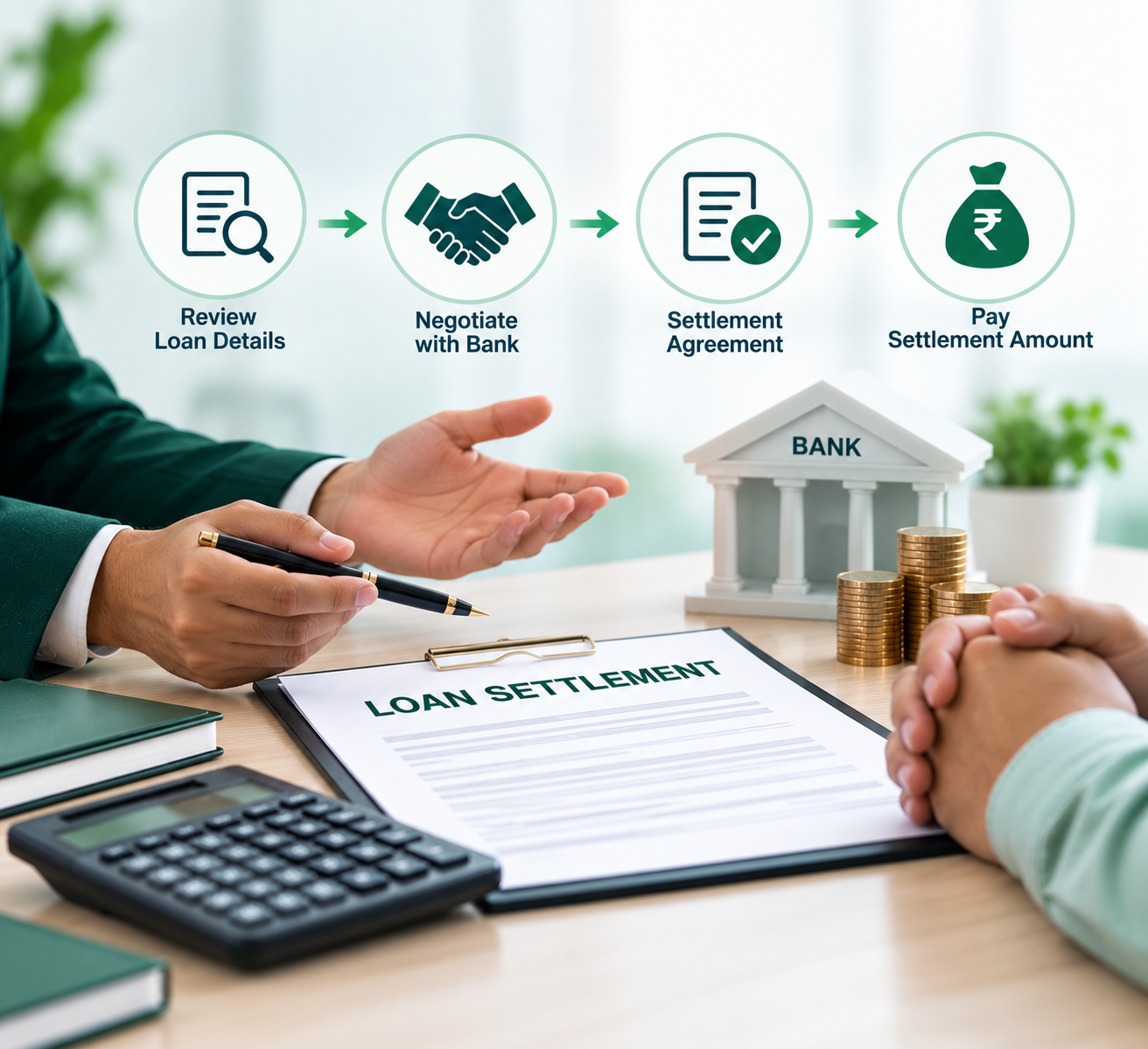
The loan settlement process generally involves several stages:
1. Assess Your Financial Situation
The first step is to understand why the existing EMI has become difficult to manage.
Consider factors such as:
- Current income
- Monthly household expenses
- Outstanding loan balances
- Number of active loans
- Existing EMI obligations
- Missed or overdue payments
- Other financial commitments
This helps determine whether settlement should even be considered or whether another repayment solution may be more appropriate.
2. Review the Outstanding Loan
Before discussing settlement, verify the outstanding balance with the lender.
Check:
- Principal outstanding
- Interest
- Late-payment charges
- Other applicable charges
- Number of overdue instalments
- Current account status
Keeping accurate records is important when discussing any resolution with a lender.
3. Discuss Available Resolution Options
Depending on your circumstances, possible options may include restructuring, revised repayment arrangements, consolidation or settlement.
Settlement should not automatically be assumed to be the best option simply because EMI payments have become difficult.
4. Review the Settlement Terms
If the lender proposes settlement terms, carefully review the amount, payment deadline and conditions before making payment.
Make sure the terms are documented through an appropriate communication or settlement document issued by the lender.
5. Complete the Agreed Payment
If you accept the settlement terms, make the payment according to the lender-approved arrangement and retain proof of payment.
6. Obtain Account Documentation
After fulfilling the agreed settlement obligation, obtain relevant documentation from the lender confirming the status of the account.
Keep these records safely for future reference and credit-report verification.
When Do Borrowers Consider Loan Settlement?
Loan settlement may be considered when a borrower is facing a significant repayment difficulty and cannot realistically continue meeting the original loan obligations.
Common situations can include:
- Significant reduction in income
- Loss of employment
- Unexpected financial hardship
- Multiple outstanding loans
- Long-standing payment arrears
- Accumulating debt obligations
- Difficulty managing several monthly EMIs
The fact that someone is struggling with an EMI does not automatically mean settlement is the right solution.
The borrower's complete financial position should be reviewed before choosing a debt-resolution approach.
Can a Personal Loan Be Settled?
A personal loan may be considered for settlement depending on the lender's policies, the account status and the borrower's circumstances.
Settlement is ultimately subject to the lender's acceptance.
If you are considering personal loan settlement, it is important to understand:
- How much is currently outstanding
- Whether the account is overdue
- What settlement amount is being proposed
- What payment deadline applies
- How the account will be reported to credit bureaus
- What documentation will be provided after payment
Loan Settlement vs Loan Closure
These terms are often confused, but they are not necessarily the same.
Loan closure generally means the borrower has repaid the amount due according to the original loan agreement and the lender closes the account.
Loan settlement involves an arrangement to resolve the outstanding debt under specifically agreed settlement terms.
The credit-report status can therefore differ between a normally closed account and a settled account.
This distinction is important when considering the longer-term financial implications.
Does Loan Settlement Affect CIBIL Score?
Yes, loan settlement can affect your credit profile.
When a loan is settled rather than repaid in full according to the original terms, the account may be reported differently to credit bureaus.
The impact on your CIBIL score and future borrowing opportunities can depend on factors such as:
- Previous repayment history
- Account status
- Lender reporting
- Other active credit accounts
- Overall credit behaviour
Therefore, borrowers should understand the potential credit implications before accepting settlement terms.
Can Loan Settlement Reduce the Amount I Have to Pay?
A lender may agree to accept an amount different from the total outstanding dues as part of a settlement arrangement.
However, there is no standard settlement percentage that applies to every borrower.
The final terms can depend on:
- Lender policies
- Loan account status
- Outstanding amount
- Repayment history
- Borrower's financial circumstances
- Lender's assessment
Avoid relying on claims that promise a specific percentage of debt reduction.
What Happens After Loan Settlement?
After the agreed settlement amount has been paid, the lender should provide appropriate documentation relating to the account.
You should retain:
- Settlement letter
- Payment receipts
- Transaction records
- Account statements
- Relevant closure/settlement documentation
It is also sensible to check your credit report later to ensure that the account information is being reported accurately.
What Documents Should You Keep?
Maintain a complete record of your loan-resolution process.
Important documents may include:
- Original loan agreement
- Latest loan statement
- Settlement communication
- Settlement letter
- Payment receipts
- Bank transaction records
- Correspondence with the lender
- Final account documentation
Keeping these documents can be useful if you later need to verify the account status or address an incorrect credit-report entry.
Is Loan Settlement the Right Option for Everyone?
No.
Loan settlement should be evaluated based on the borrower's actual financial situation.
Depending on the circumstances, alternatives may include:
Loan Restructuring
The lender may modify certain repayment terms to make the loan more manageable, subject to eligibility and approval.
Debt Consolidation
Multiple debts may potentially be combined into a more manageable repayment structure, depending on eligibility and available products.
Revised Repayment Arrangement
A borrower may discuss repayment options directly with the lender.
Loan Settlement
This may be considered when continuing repayment under the original terms is not realistically manageable and the lender is willing to agree to settlement.
The right approach depends on the individual situation.
Common Loan Settlement Mistakes to Avoid
1. Making payments without verifying the settlement terms
Always confirm the payment instructions and agreed terms through appropriate lender channels.
2. Assuming settlement means the loan is simply "cancelled"
Settlement resolves the account according to agreed terms. It does not mean that every financial consequence disappears.
3. Ignoring the impact on your credit profile
Understand how the lender may report the settled account before proceeding.
4. Focusing only on the settlement amount
Also consider payment deadlines, documentation and future credit implications.
5. Losing payment records
Keep every receipt, statement and communication related to the settlement.
6. Assuming every lender follows the same process
Settlement policies and procedures can vary between lenders and account types.
What Should You Check Before Accepting Loan Settlement?
Before making a settlement payment, verify:
✔ Outstanding amount
Confirm the current balance.
✔ Settlement amount
Ensure the agreed amount is clearly documented.
✔ Payment deadline
Check when the settlement amount must be paid.
✔ Payment method
Use verified payment channels associated with the lender.
✔ Account status
Understand how the account will be reported.
✔ Documentation
Confirm what documents you will receive after fulfilling the settlement terms.
✔ Credit implications
Understand the potential effect on your credit profile.
Final Thoughts
Loan settlement can be an option for borrowers who are facing serious difficulty managing their outstanding loan obligations. However, it should be considered carefully rather than treated as a quick way to reduce debt.
Before proceeding, understand your financial position, compare available debt-resolution options, verify the lender's settlement terms and keep complete documentation.
If you are struggling with one or more outstanding loans, a personalized assessment of your debt situation can help you understand which options may be relevant to your circumstances.