Are you struggling to repay your RBL Bank credit card outstanding? Have increasing interest charges, late payment fees and multiple bills made your monthly finances difficult to manage?
When credit card repayments become unaffordable, borrowers often start searching for options such as RBL credit card settlement, one-time settlement (OTS), repayment restructuring or debt resolution.
Credit card settlement may be an option in certain financial hardship situations. However, it is important to understand how the process works, whether you may qualify, how the settlement amount is decided and what happens to your CIBIL report afterwards.
This guide explains the RBL Bank credit card settlement process in India, the factors that may influence a settlement offer, important precautions and alternatives borrowers should consider before making a decision.
What Is RBL Credit Card Settlement?
RBL credit card settlement is a negotiated arrangement between a credit cardholder and RBL Bank to resolve outstanding credit card dues for an agreed amount.
In some circumstances, a lender may agree to accept an amount lower than the total outstanding balance. This may happen when a borrower is experiencing genuine financial hardship and cannot repay the full amount.
For example, a borrower may have outstanding credit card dues that include the principal amount, interest, late payment charges and other applicable fees. If the borrower faces a significant financial setback, they may approach the bank to discuss possible repayment or settlement arrangements.
If the bank agrees to a settlement, the borrower must follow the agreed terms and payment schedule.
Important: RBL Bank is not obligated to approve every settlement request. The final decision, settlement amount and conditions depend on the bank's assessment and applicable policies.
Can You Settle an RBL Bank Credit Card?
Yes, a credit card settlement arrangement may be possible in certain circumstances, subject to the bank's approval.
However, there is no automatic entitlement to a settlement simply because a borrower has missed payments or cannot pay the minimum amount due.
The bank may consider several factors before evaluating a request.
These may include:
- The total outstanding credit card balance.
- How long the account has remained overdue.
- The borrower's repayment history.
- Current income and financial circumstances.
- Whether the borrower has experienced job loss, business losses or a medical emergency.
- The borrower's ability to arrange a realistic payment.
- The bank's internal settlement and recovery policies.
A borrower experiencing genuine financial hardship should communicate with the bank and explain the situation with supporting information.
RBL Credit Card Settlement Percentage: How Much Can You Pay?
One of the most frequently searched questions is: What percentage does RBL Bank accept for credit card settlement?
There is no publicly guaranteed or universally applicable RBL credit card settlement percentage.
The amount, if any, that the bank agrees to accept depends on the individual account and the bank's assessment.
The settlement amount may be influenced by:
1. Total outstanding balance
The bank considers the amount currently payable, including applicable interest, fees and charges.
2. Overdue duration
The repayment history and period of default may form part of the bank's assessment.
3. Financial hardship
A borrower who can demonstrate genuine repayment difficulties may request consideration of a suitable resolution arrangement.
4. Repayment capacity
The amount a borrower can realistically arrange may be relevant during discussions.
5. Bank approval
The final amount and terms remain subject to RBL Bank's decision.
Is there a fixed RBL credit card OTS percentage?
No. Borrowers should be cautious about websites, agents or advertisements promising a guaranteed settlement percentage.
A percentage mentioned in someone else's settlement case does not establish what another borrower will receive.
Before making any payment, obtain the bank's written settlement terms and verify the payment instructions through official bank channels.
RBL Credit Card Settlement Process: Step-by-Step Guide
If you are unable to manage your RBL credit card payments, follow a structured approach rather than relying on verbal assurances.
Step 1: Review Your Outstanding Credit Card Balance
Start by checking your latest RBL Bank credit card statement.
Identify:
- Total outstanding balance.
- Minimum amount due.
- Interest and late payment charges.
- Overdue amount.
- Any disputed or unauthorised transactions.
This gives you a clearer picture of your financial obligation.
Step 2: Assess Your Financial Situation
Prepare a realistic assessment of your current financial position.
Consider your monthly income, household expenses, existing loans, other credit card dues and the amount you can reasonably arrange.
If you are facing a temporary financial problem, a repayment arrangement may be more suitable than settlement.
Step 3: Contact RBL Bank
Reach out to RBL Bank through its official customer service or grievance channels.
Explain your financial circumstances and ask about the available options for managing your outstanding credit card dues.
You may ask whether the bank can consider:
- A structured repayment arrangement.
- Eligible EMI conversion or repayment options.
- A revised repayment schedule, where available.
- A compromise settlement, if applicable.
Do not assume that a settlement request has been approved merely because it has been discussed with a representative.
Step 4: Submit Supporting Documents
The bank may ask for documents to understand your financial circumstances.
Depending on your situation, these may include:
- Recent bank statements.
- Salary slips or income proof.
- Employment termination documents, if applicable.
- Medical bills or emergency expense records.
- Business income or loss information.
- Other documents requested by the bank.
Submit only genuine and relevant information through verified channels.
Step 5: Review the Settlement Offer
If RBL Bank agrees to consider a settlement, carefully review the written offer.
Check the following details:
- Approved settlement amount.
- Payment deadline.
- Instalment schedule, if permitted.
- Conditions for completion.
- Consequences of missing the agreed payment.
- How the account will be reported to credit information companies.
Make sure you understand every condition before accepting the offer.
Step 6: Make Payment Through Official Channels
Only make payment using the official payment instructions confirmed by RBL Bank.
Do not transfer money to an individual's personal UPI ID, QR code or bank account based on an agent's verbal assurance.
Keep payment receipts and transaction references safely.
Step 7: Obtain Settlement Confirmation
After completing the agreed payment, request written confirmation from the bank.
Retain the settlement letter, payment receipts and final account-related communication.
Later, review your credit report to check whether the account information has been updated correctly.
What Is the Difference Between RBL Credit Card Settlement and Full Payment?
Understanding this difference is essential before making a decision.
|
Factor |
Full Payment |
Settlement |
|
Payment |
Entire outstanding amount |
Agreed amount, potentially lower |
|
Bank approval |
Normal repayment |
Requires bank acceptance |
|
Account reporting |
May be reported as closed after full dues are cleared |
May be reported as settled |
|
Credit impact |
Generally more favourable |
Can negatively affect creditworthiness |
|
Future borrowing |
Depends on overall credit profile |
May become more difficult |
RBL Bank's cardmember agreement explains that when the bank accepts an amount lower than the total outstanding dues, the account may be reported as "Settled" or "Settled for Less than Full Balance".
It also clarifies that such an account is not treated as "Closed" or "Fully Paid" merely because the agreed settlement amount has been paid.
This distinction is important for borrowers planning their future financial activities.
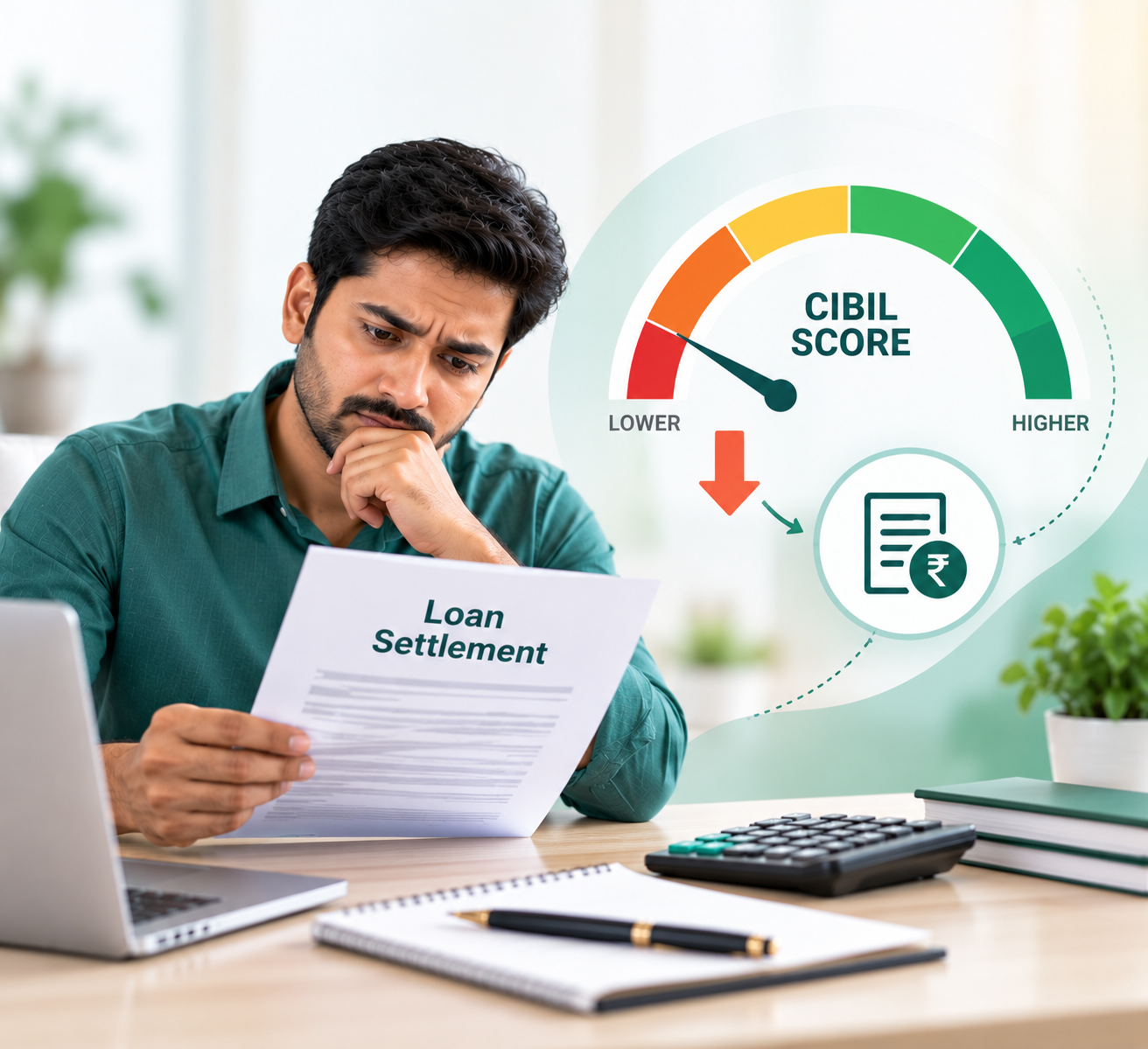
Does RBL Credit Card Settlement Affect Your CIBIL Score?
Yes. RBL credit card settlement can have a negative impact on your credit profile.
When a lender accepts less than the full outstanding amount, the account may be reported with a settled status to credit information companies.
Lenders may view a settled account less favourably than an account that has been fully repaid.
Settled vs Closed: What Is the Difference?
Settled: The lender has accepted an agreed amount that is lower than the total outstanding dues.
Closed: The entire outstanding amount payable to the lender has been received and the account has been closed.
These statuses are not interchangeable.
TransUnion CIBIL also explains that a settled status may affect future credit applications because lenders can view it as an indication that the borrower did not repay the full contractual obligation.
Can You Improve Your CIBIL Profile After Settlement?
Credit health can be rebuilt over time through responsible financial behaviour.
Consider the following steps:
- Obtain and preserve the settlement confirmation.
- Review your CIBIL report and other relevant credit reports.
- Check whether the account status and outstanding balance are reported accurately.
- Raise a dispute if you identify incorrect information.
- Pay other active loan and credit card obligations on time.
- Avoid unnecessary credit applications and excessive borrowing.
If you later pay the remaining amount, discuss the account status with the bank and ask whether it can be updated appropriately. Any change depends on the lender's confirmation and applicable reporting requirements.
There is no guaranteed timeline for credit-score recovery.
What Happens If You Cannot Pay Your RBL Credit Card Bill?
If you cannot pay your RBL credit card bill, the consequences may depend on the duration of the overdue amount and the bank's applicable policies.
Possible consequences include:
- Interest and applicable charges may continue to accrue.
- Late payment charges may apply.
- The bank may restrict or block card usage.
- Your repayment history may be reported to credit information companies.
- The account may progress through applicable overdue classifications.
- The bank may initiate recovery action in accordance with applicable terms and laws.
RBL Bank's published cardmember agreement explains that a credit card account may be classified as a non-performing asset when the minimum amount due remains unpaid for more than 90 days, subject to applicable regulatory norms.
Ignoring payment reminders does not automatically make the outstanding amount disappear.
If repayment has become difficult, contact the bank and understand the available options as early as possible.
Can RBL Bank Recovery Agents Harass You?
Borrowers should understand that recovery of outstanding dues must follow applicable regulatory requirements.
The Reserve Bank of India has issued instructions prohibiting regulated entities and their recovery agents from using intimidation or harassment during debt collection.
These restrictions include:
- Threatening or anonymous calls.
- Verbal or physical intimidation.
- Public humiliation.
- Intrusion into the privacy of family members or friends.
- Inappropriate messages.
- Persistent calls intended to harass borrowers.
- Recovery calls before 8:00 a.m. or after 7:00 p.m. under the applicable recovery-agent instructions.
If you experience inappropriate recovery practices, maintain records of calls, messages and other communications.
You can raise a complaint through the bank's official grievance-redressal mechanism. If the matter remains unresolved after following the applicable complaint process, you may explore the RBI's complaint-redressal framework, subject to its eligibility requirements.
Remember, borrowers remain responsible for legitimate outstanding dues even when they have concerns about recovery practices.
What Are the Alternatives to RBL Credit Card Settlement?
Settlement is not the only possible way to manage credit card debt.
Depending on your financial position and the options offered by the bank, consider the following alternatives.
1. Credit Card EMI Conversion
If you have sufficient repayment capacity, ask the bank whether eligible outstanding transactions or balances can be converted into instalments.
Check the interest rate, processing fees, tenure and total repayment amount before accepting.
2. Structured Repayment Arrangement
You may discuss a manageable repayment arrangement with the bank.
The availability and conditions of such an arrangement depend on the account and bank policies.
3. Debt Consolidation
If you have multiple high-interest debts, debt consolidation may be worth evaluating.
This involves combining eligible debts into a single repayment facility, where available.
However, compare the interest rate, fees, tenure and total cost before taking another loan.
4. Full Repayment Through Financial Planning
If your financial difficulty is temporary, preparing a repayment budget may help you clear the outstanding balance without entering into a settlement arrangement.
5. Debt Resolution Guidance
If you are facing multiple overdue accounts, limited income and persistent repayment difficulties, professional debt-resolution guidance may help you understand the available options and their potential consequences.
Common Mistakes to Avoid During RBL Credit Card Settlement
Before proceeding with any settlement discussion, avoid these mistakes:
Trusting guaranteed settlement promises: No third party can guarantee that RBL Bank will accept a particular amount.
Paying without written confirmation: Always obtain and verify the official settlement terms before transferring money.
Ignoring CIBIL implications: A settled account may affect future loan and credit card applications.
Stopping communication with the bank: Maintain appropriate communication and respond to legitimate account-related notices.
Borrowing more without assessing affordability: Taking another high-interest loan to manage existing credit card debt can increase financial pressure.
Ignoring settlement documentation: Keep every letter, receipt and confirmation relating to the arrangement.
Paying personal accounts: Never send settlement payments to personal UPI IDs or individual bank accounts on the assurance that an agent will settle your account.
How ReducedDebts Can Help With RBL Credit Card Debt
Managing credit card debt can become challenging when multiple repayments, overdue balances and financial responsibilities overlap.
ReducedDebts is a debt resolution and loan settlement platform in India that helps borrowers understand their financial situation and explore suitable debt-resolution options.
For individuals struggling with RBL credit card dues or other outstanding debts, the guidance process can include:
- Understanding the overall outstanding debt position.
- Reviewing repayment difficulties.
- Exploring available debt-resolution options.
- Understanding the potential implications of settlement.
- Preparing for discussions with lenders.
- Understanding documentation and payment precautions.
Our approach focuses on informed decisions, transparent guidance and realistic expectations.
Every borrower's financial circumstances are different. Any settlement arrangement remains subject to the respective lender's policies, terms and approval.
If you are struggling with RBL credit card dues, you can visit ReducedDebts to understand your debt-resolution options.
Final Thoughts
RBL credit card settlement may be one possible debt-resolution option for borrowers facing serious financial difficulties. However, it should be considered only after understanding the repayment alternatives, bank approval requirements and potential impact on credit history.
Before agreeing to any settlement, verify the offer directly with RBL Bank, understand the payment conditions and keep all relevant documents.
Financial decisions made during a difficult period can influence your future borrowing opportunities. Take time to understand your options and choose a realistic approach.
Need guidance with credit card debt or multiple outstanding loans? Visit ReducedDebts to understand your available debt-resolution options.
Disclaimer: This article is for general educational and informational purposes only and does not constitute financial or legal advice. ReducedDebts is not a lender or a law firm. RBL Bank independently determines whether to approve a settlement and the terms of any arrangement. No settlement amount, debt reduction or credit-score improvement is guaranteed. Borrowers should verify account-specific information directly with RBL Bank and review the applicable terms before making financial decisions.