1. Why Does Closing a Savings Account Usually Not Affect Your CIBIL Score?
Your CIBIL score is based on information related to your credit history. This generally includes:
- Your repayment history on loans and credit cards
- Outstanding loan and credit-card balances
- Credit utilisation
- Length of your credit history
- Credit enquiries and other credit-report information
A regular savings account is not a borrowing facility. Its deposits, withdrawals and available balance are generally not used to calculate your credit score.
Therefore, closing an ordinary savings account does not normally create the same credit-report impact as closing a credit card or settling a loan.
Example: Suppose you have three savings accounts with different banks and decide to close one that you no longer use. If you have no linked credit obligations or unpaid liabilities, the closure itself would not ordinarily reduce your CIBIL score.
2. Can Closing a Salary Account Affect Your CIBIL Score?
Closing a salary account does not normally affect your credit score directly. However, salary accounts often have several important financial transactions connected to them.
Before closing one, check whether it is being used for:
- Monthly salary deposits
- Personal loan or home loan EMIs
- Credit-card bill payments
- Insurance premium payments
- SIP investments
- Other standing instructions and subscriptions
If your employer continues sending your salary to the old account after it has been closed, the payment may be delayed or returned. Similarly, an EMI linked to the account may fail.
What should you do?
First, provide your employer with the new bank account details. Then update your loan repayment mandates, credit-card auto-pay instructions and other recurring payments. Verify that the transactions are working before closing the old account.
3. When Can Closing a Bank Account Create Credit Score Problems?
The account closure itself is generally not the problem. The financial transactions affected by the closure can create complications.
Here are some common situations.
A. Your loan EMI gets rejected
If your personal loan EMI is automatically deducted from your old savings account, closing that account can cause the debit to fail.
The lender may treat the instalment as unpaid until the payment is received and processed. Depending on the circumstances and reporting, this can affect your repayment record.
B. Your credit-card auto-payment fails
Many customers use automatic payment instructions to pay their credit-card bills. If the linked bank account is closed without updating the mandate, the payment may not go through.
A missed credit-card payment can lead to late-payment charges, additional interest and potential negative reporting to credit bureaus.
C. You forget other recurring payments
Some financial commitments are easy to overlook, including:
- Insurance premiums
- SIP instalments
- Utility bills
- Subscription payments
- Other standing instructions
Not every failed transaction affects your CIBIL score. The impact depends on the nature of the payment and whether it represents a credit obligation reported by a lender.
D. You leave unpaid liabilities with the bank
Before closing an account, check for negative balances, unpaid charges, overdraft dues or other outstanding liabilities.
A normal savings-account closure is different from the closure of an account carrying a credit facility. If an overdraft or another borrowing facility is involved, its repayment and reporting may have separate credit implications.
4. Does Closing a Dormant or Zero-Balance Account Affect CIBIL?
Having an unused or dormant savings account does not ordinarily reduce your CIBIL score.
You may choose to close such an account if:
- You no longer need it.
- The account has minimum-balance requirements.
- You want to simplify your banking.
- You are concerned about forgotten transactions or account maintenance charges.
However, check for any pending charges and linked services before requesting closure.
There is no need to keep an unnecessary savings account open solely because you are worried that closing it will lower your credit score.
5. Is Closing a Bank Account the Same as Closing a Credit Card?
No. These are two different financial decisions.
A savings account holds your deposits, while a credit card provides access to borrowed funds. Since credit cards are reported as credit accounts, closing one can influence aspects of your credit profile.
For example, closing a credit card may:
- Reduce your total available credit limit.
- Increase your overall credit utilisation ratio if you continue using other cards.
- Change the mix of credit accounts reflected in your report.
- Affect how your credit history is represented.
Example:
Suppose you have two credit cards:
- Card A: ₹1,00,000 limit
- Card B: ₹1,00,000 limit
Your total available credit is ₹2,00,000. If you close Card A while continuing to carry ₹50,000 in outstanding dues on Card B, your utilisation of the remaining limit becomes 50% instead of 25%.
This change may influence your credit profile.
Closing a loan after fully repaying it is also different from closing a savings account. The loan account and its repayment history can continue to appear in your credit report with a closed status.
Before closing a credit card or loan account, review its outstanding balance, repayment history and possible effect on your overall credit profile.
6. What Should You Check Before Closing a Bank Account?
A little preparation can help you avoid missed payments and unnecessary banking problems.
Follow this checklist before submitting your account-closure request:
- Review your transactions: Check recent statements to identify recurring credits and debits.
- Move your salary: Update your employer's records with your new account details.
- Update EMI mandates: Contact your lenders and change the repayment account.
- Update credit-card auto-pay: Make sure future card bills will be paid from an active account.
- Check standing instructions: Review insurance, SIPs, subscriptions and utility payments.
- Clear pending dues: Pay any negative balance, charges or overdraft liability.
- Check linked products: Review fixed deposits, lockers, cards and other services connected to the account.
- Keep enough balance: Maintain sufficient funds in the new account for upcoming payments.
- Verify transactions: Confirm that important payments are successfully processed from the new account.
- Collect closure confirmation: Keep the bank's account-closure acknowledgement for your records.
A useful precaution is to keep the old account active until the important payment instructions have been successfully moved to the new account.
7. What If Your EMI Bounces After Closing a Bank Account?
If an EMI fails because your old bank account was closed, take action as soon as possible.
Step 1: Contact your lender
Inform the lender that the repayment mandate failed because the linked account was closed.
Step 2: Pay the pending instalment
Use another payment method accepted by the lender. Ask for confirmation that the payment has been received and credited.
Step 3: Update your repayment mandate
Provide your new bank account details and complete the required mandate-update process.
Step 4: Check for additional charges
Ask the lender whether any late-payment or mandate-failure charges have been applied.
Step 5: Review your credit report
After the lender has processed the payment and the relevant reporting cycle has passed, review your credit report to check how the payment has been recorded.
If you believe an incorrect late-payment entry has been reported, raise a complaint with the lender and the relevant credit information company. Keep payment receipts, bank statements and communication records.
The Reserve Bank of India has prescribed a framework for resolving complaints about delayed correction or updating of credit information. Eligible unresolved complaints may attract compensation of ₹100 per calendar day beyond the prescribed 30-day resolution period, subject to the applicable conditions. Refer to the RBI directions for the exact process and eligibility.
8. Does Opening a New Savings Account Improve Your CIBIL Score?
Opening a regular savings account does not automatically improve your CIBIL score.
Your savings balance, number of savings accounts and regular deposits are not substitutes for a credit repayment history.
If your objective is to build a stronger credit profile, focus on responsible use of credit products:
- Pay loan EMIs on time.
- Pay credit-card bills by their due dates.
- Keep credit-card utilisation under control.
- Avoid applying for several credit products within a short period.
- Review your credit report periodically.
- Correct inaccurate information through the appropriate dispute process.
A savings account can still support good financial habits by helping you maintain funds for upcoming EMIs and automate repayments. Its benefit is indirect: it can make timely payments easier.
9. How Can You Check Whether Your CIBIL Score Has Been Affected?
If you have recently closed a bank account and are concerned about your credit profile, reviewing your credit report can help.
Check the following:
- Whether any new late-payment entry has appeared.
- Whether an existing loan or credit-card account shows an unexpected status.
- Whether the outstanding balance is accurate.
- Whether any unfamiliar credit account or enquiry appears.
- Whether a payment you made has been correctly updated.
You can obtain your credit report directly from an authorised credit information company. Review the information carefully and raise a dispute if you identify an error.
Remember that credit reports may not reflect every recent transaction immediately. Allow for the lender's reporting cycle and the bureau's processing time.
10. What If You Are Closing Bank Accounts Because You Cannot Manage Your EMIs?
Sometimes, people start closing accounts or moving money between banks because their monthly loan repayments have become difficult to manage.
It is important to understand that closing a savings account does not reduce your outstanding loan amount or cancel your repayment obligations.
If you are struggling with multiple EMIs, increasing credit-card dues or personal loan repayments, consider reviewing your financial position before making further decisions.
Depending on your circumstances, you may explore:
- Repayment planning: Review your income, essential expenses and outstanding liabilities.
- Loan restructuring: Ask your lender whether a suitable repayment arrangement is available.
- Debt consolidation: Evaluate whether combining eligible debts into a single facility is financially suitable and affordable.
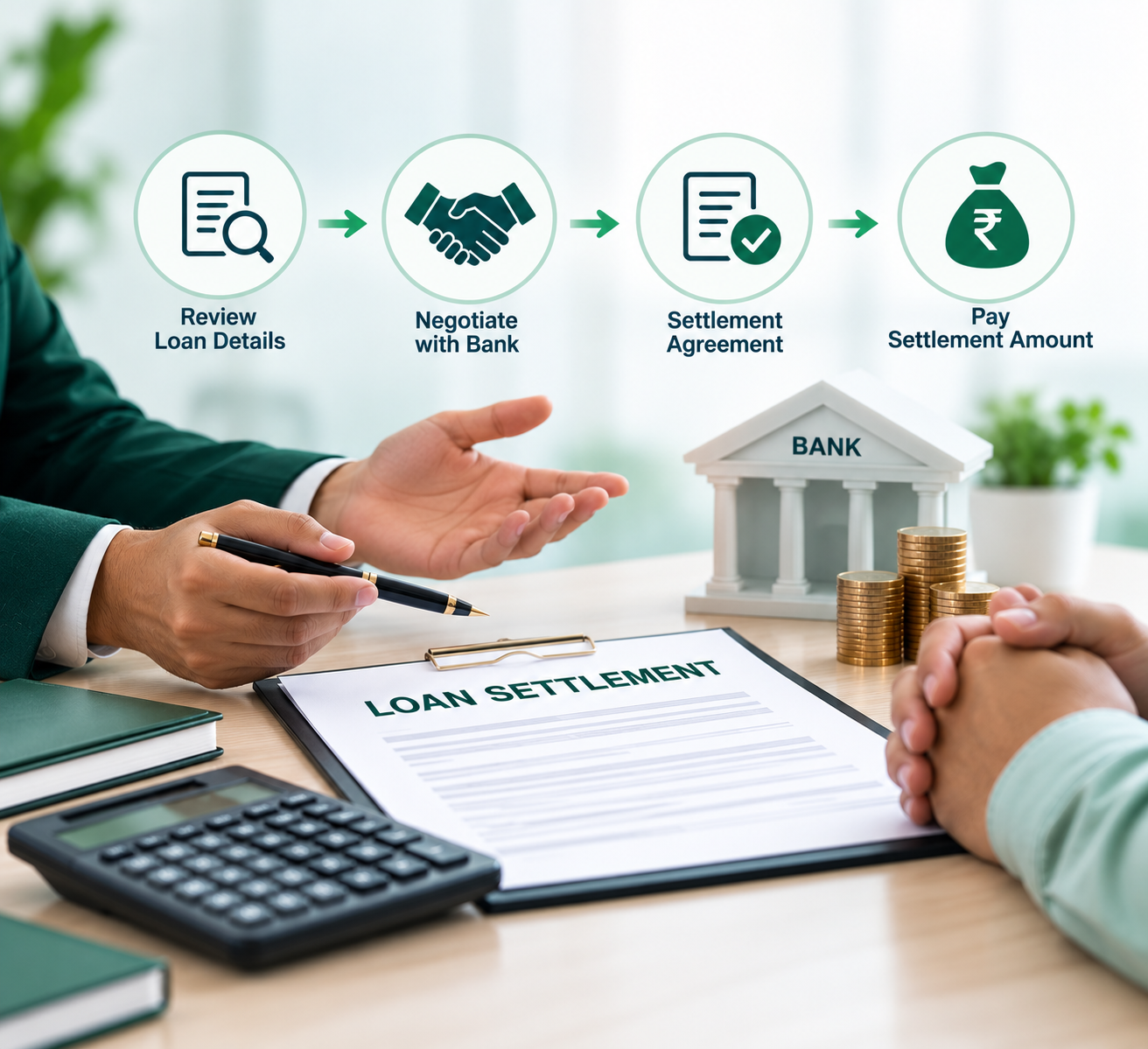
- Loan settlement: If you are genuinely unable to repay the full outstanding amount, you may discuss a possible compromise settlement with the lender. Approval is not guaranteed, and settlement can have a negative impact on your credit profile.
Loan settlement should not be treated as an automatic solution or a substitute for ordinary repayment. Understand the financial and credit-report implications before proceeding.
At ReducedDebts, borrowers can seek guidance to understand their debt situation and explore relevant debt-resolution options. ReducedDebts is not a lender, and any settlement or repayment arrangement remains subject to the respective lender's policies and approval.
Final Thoughts
Closing an unused savings or salary account is generally a routine banking decision and does not normally reduce your CIBIL score by itself. The important thing is to ensure that closing the account does not interrupt your loan EMIs, credit-card payments or other financial commitments.
If you are already struggling with multiple loans, missed payments or growing credit-card dues, focus on understanding your overall debt situation rather than assuming that closing a bank account will solve the problem.
ReducedDebts helps borrowers understand loan settlement and debt-resolution options so they can make informed financial decisions. Every case is different, and any settlement remains subject to lender approval.
Disclaimer: This article is for general educational purposes and is not financial or legal advice. Credit-reporting outcomes depend on the lender, the nature of the credit facility and the information reported to credit bureaus. ReducedDebts is not a lender or a law firm. Loan settlement is subject to lender approval and may negatively affect your credit profile.