1. What Is Debt Consolidation?
Debt consolidation means combining multiple eligible loans or credit obligations into one repayment facility.
For example, a borrower may have:
- Personal Loan A.
- Personal Loan B.
- Credit-card outstanding.
- Another eligible unsecured loan.
Instead of managing several payment dates, the borrower may take a consolidation loan and use it to repay eligible existing obligations.
The borrower then makes repayments under the new loan agreement.
How Does Debt Consolidation Work?
A typical process may include:
- Reviewing all existing debts.
- Calculating the total outstanding amount.
- Checking eligibility for consolidation.
- Comparing available interest rates and fees.
- Applying to a suitable lender.
- Using the approved funds to repay eligible debts.
- Managing the new repayment schedule.
Approval depends on the lender's assessment of income, credit history, outstanding liabilities and other eligibility requirements.
2. What Is Loan Settlement?
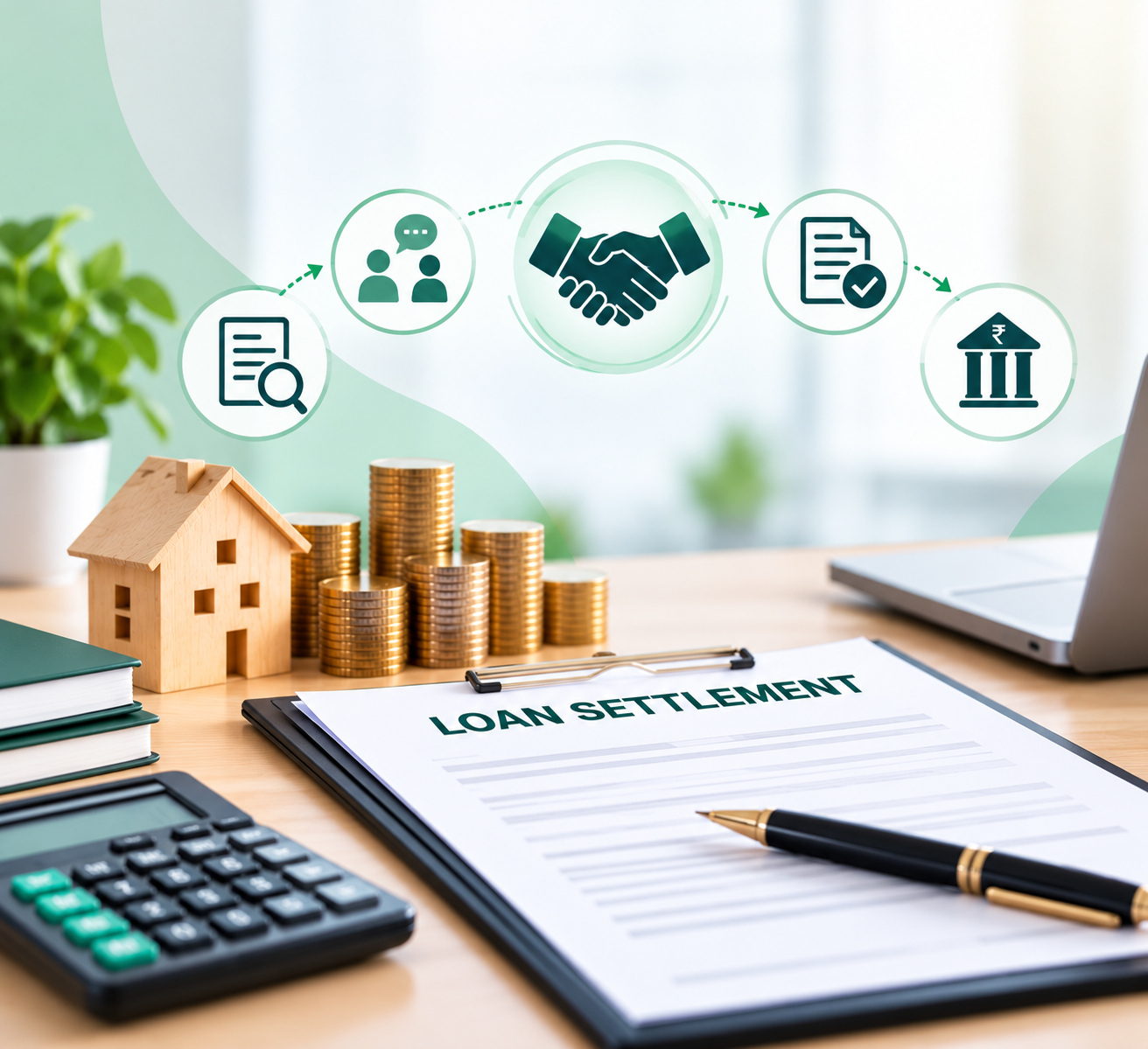
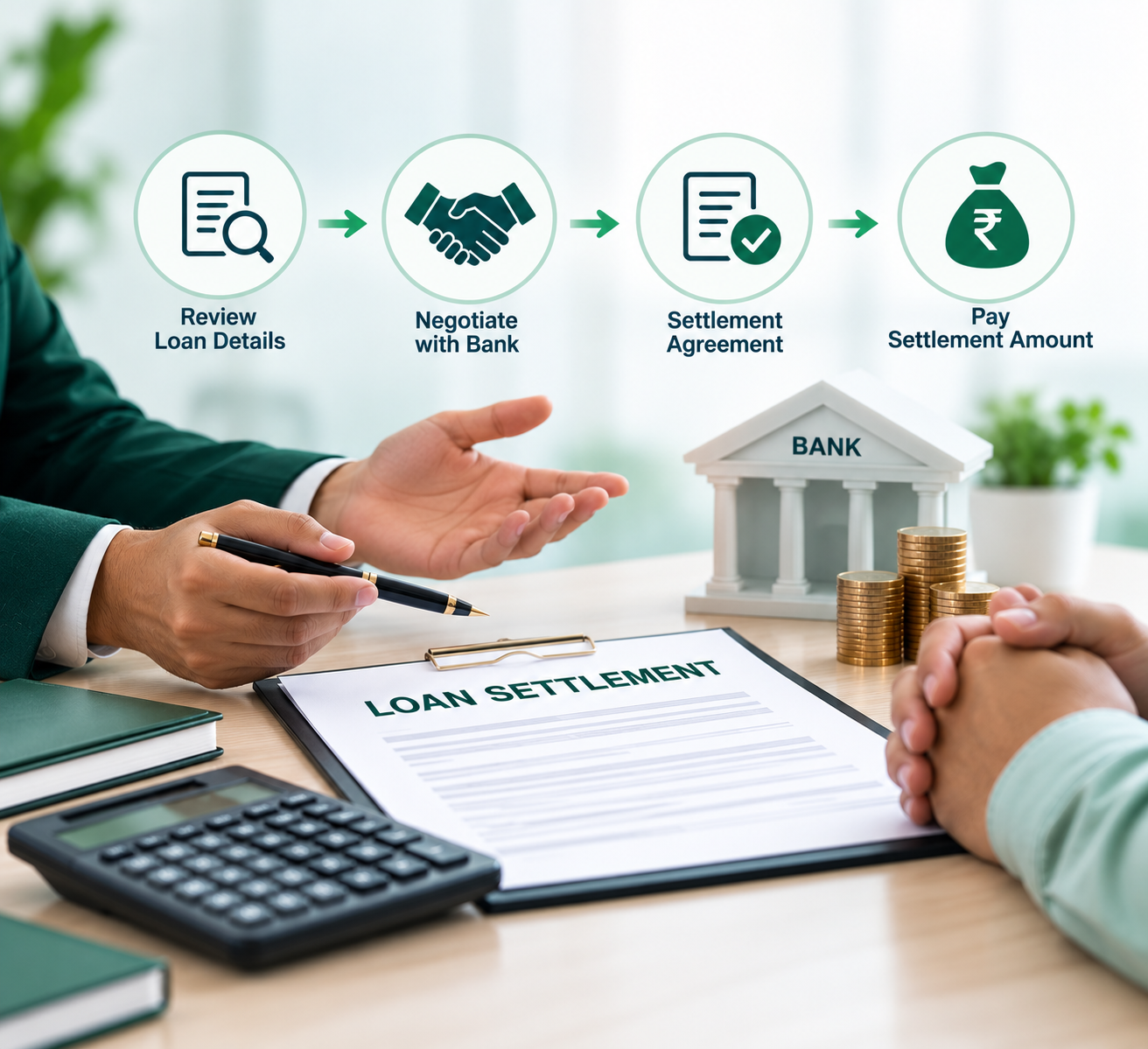
Loan settlement is a negotiated arrangement between a borrower and lender to accept an agreed amount that may be lower than the full contractual outstanding amount.
It may be discussed when a borrower faces genuine financial hardship and cannot realistically repay the full amount under the existing arrangement.
For example:
A borrower has an outstanding loan obligation of ₹2,00,000. Due to severe financial hardship, the borrower approaches the lender to discuss a possible compromise settlement.
The lender reviews the case and may or may not approve a settlement proposal.
If approved, the borrower must follow the written settlement terms and payment schedule.
Important: This example is illustrative. There is no fixed settlement percentage or guaranteed reduction.
3. Debt Consolidation vs Loan Settlement: Key Differences
|
Comparison |
Debt consolidation |
Loan settlement |
|
Main objective |
Combine eligible debts |
Negotiate resolution of an outstanding debt |
|
Payment structure |
New repayment facility |
Agreed settlement amount |
|
Full repayment |
Generally expected under new terms |
May be less than full contractual dues |
|
Lender approval |
Required for new credit |
Required for settlement |
|
Credit profile |
New credit and repayment terms may affect it |
Settled status may negatively affect it |
|
Suitable situation |
Repayments are manageable under suitable new terms |
Borrower faces serious repayment hardship |
|
Interest |
Depends on new facility |
Depends on settlement terms and agreed amount |
|
Future borrowing |
Depends on credit profile and new obligations |
May become more difficult due to settled status |
4. Example: How Debt Consolidation May Work
Suppose a borrower has the following outstanding debts:
|
Existing debt |
Outstanding |
|
Personal Loan A |
₹1,00,000 |
|
Personal Loan B |
₹75,000 |
|
Credit-card dues |
₹50,000 |
|
Total |
₹2,25,000 |
The borrower explores a consolidation loan of ₹2,25,000.
If approved, the new loan may be used to repay the eligible existing debts.
The borrower then manages one repayment schedule instead of several.
However, consolidation is beneficial only if the new terms are affordable and the total cost is reasonable.
A longer tenure may reduce the EMI but increase the total interest payable.
5. Example: How Loan Settlement May Work
Suppose a borrower has an outstanding amount of ₹1,50,000 and is facing serious financial hardship.
The borrower approaches the lender to request a possible compromise settlement.
The lender reviews the borrower's circumstances and decides whether to approve the proposal.
If an agreement is reached, the lender provides written settlement terms.
The borrower must pay the agreed amount according to those terms.
The lender may report the account as "Settled" rather than "Closed" or "Paid in Full", depending on the nature of the arrangement and applicable reporting requirements.
This can negatively affect the borrower's credit profile.
6. Which Option Is Better for Your CIBIL Score?
The credit-report consequences are different.
Debt Consolidation
A new consolidation loan may appear as a new credit account. Existing loans may be updated after they are repaid and closed.
If payments are made on time and the new facility is managed responsibly, consolidation may support more organised credit management.
However, applying for new credit, changing overall borrowing and increasing total repayment obligations can affect your credit profile.
Loan Settlement
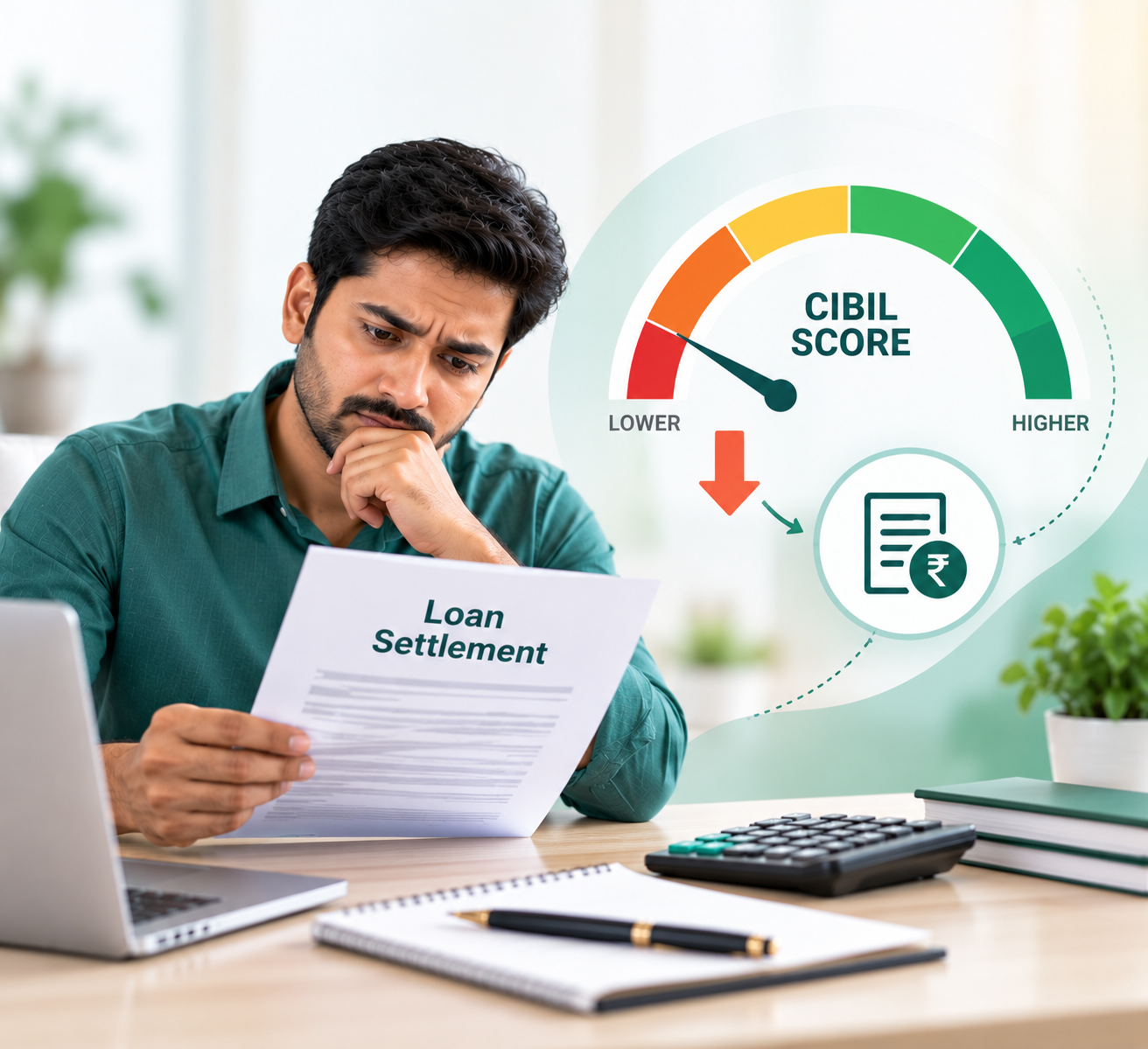
A compromise settlement may be reported as "Settled".
CIBIL explains that a settled account means the lender has agreed to accept less than the full amount originally due.
Future lenders may view this status as a sign of repayment risk.
Settlement does not automatically improve your CIBIL score or erase past repayment information.
7. Advantages and Disadvantages of Debt Consolidation
Advantages
- One repayment schedule may be easier to manage.
- Multiple payment dates may be reduced.
- A suitable lower interest rate may reduce borrowing costs.
- Budgeting can become more organised.
- It may help borrowers manage eligible debts without settling them.
Disadvantages
- New credit approval is required.
- Processing fees may apply.
- Longer tenure can increase total interest.
- The borrower may accumulate new debt after consolidation.
- A lower EMI does not always mean lower overall cost.
8. Advantages and Disadvantages of Loan Settlement
Advantages
- May help resolve a debt when full repayment is genuinely unaffordable.
- Can provide a defined payment arrangement if the lender approves it.
- May help borrowers address certain long-standing repayment difficulties.
Disadvantages
- Approval is not guaranteed.
- The lender may reject the proposal.
- A settled status may negatively affect the credit report.
- Future loan approvals may become more difficult.
- The agreed amount must be paid according to the written terms.
- It may not be suitable where normal repayment or restructuring remains affordable.
9. When Should You Consider Debt Consolidation?
Debt consolidation may be worth evaluating if:
- You have multiple loans with different due dates.
- Your income is reasonably stable.
- You can afford the proposed consolidated EMI.
- The new interest rate and total cost are competitive.
- You are eligible for a suitable facility.
- You can avoid accumulating new debt after consolidation.
Before applying, compare the complete cost of the new loan with the cost of continuing existing repayments.
10. When Should You Consider Loan Settlement?
You may discuss settlement with a lender if:
- You have experienced significant income loss.
- You are facing serious medical or family financial difficulties.
- You cannot realistically manage the full repayment.
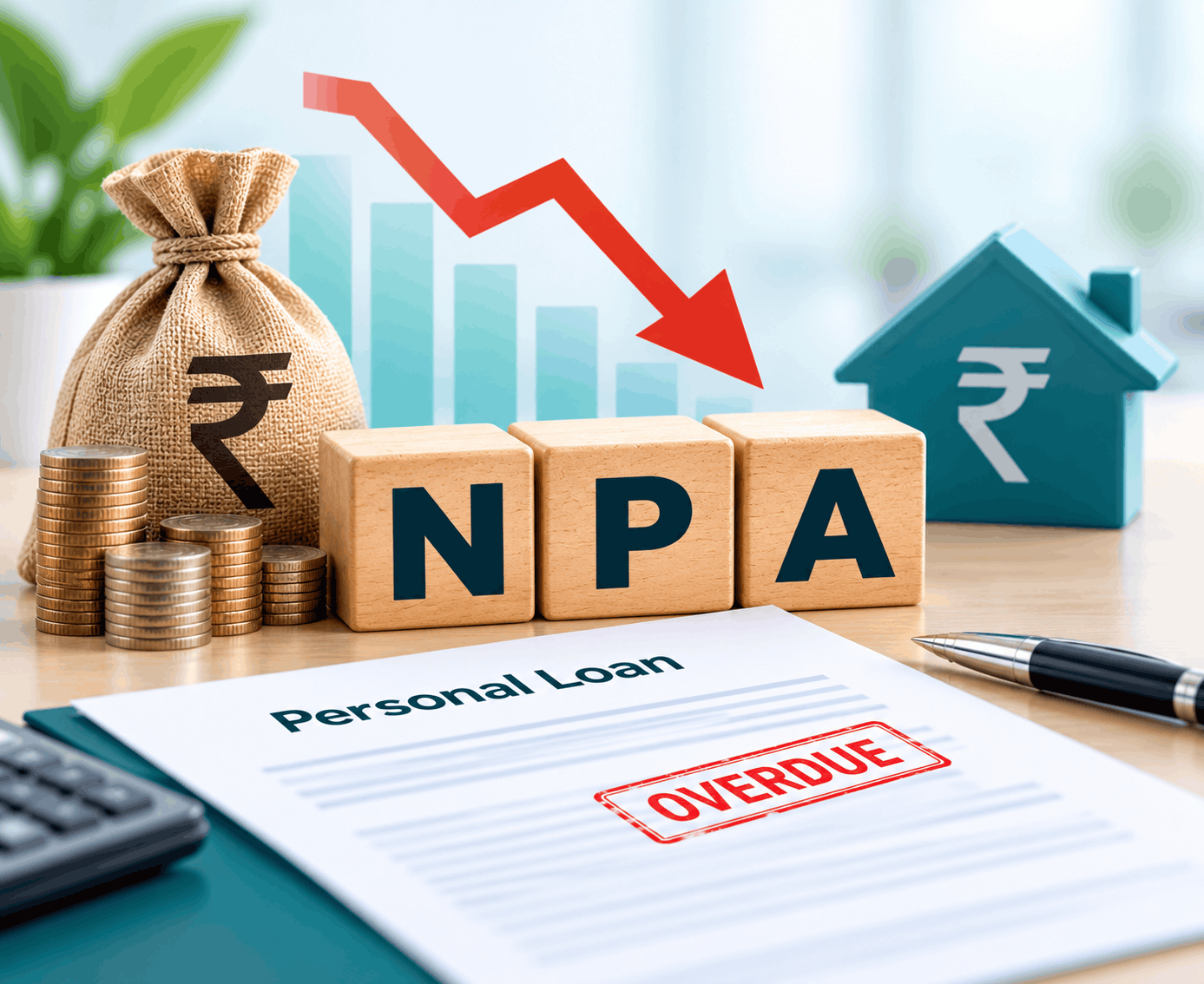
- Your existing obligations have become seriously overdue.
- Other repayment options are not feasible.
Settlement is a lender-approved compromise, not an automatic right.
The lender's policy and individual assessment determine whether it will consider the request.
11. What Should You Check Before Choosing Either Option?
Before making a decision, prepare a complete financial assessment.
Check Your Total Outstanding Debt
List every personal loan, credit card, digital loan and other borrowing.
Calculate Your Monthly Repayment Capacity
Subtract essential expenses from your monthly take-home income.
Compare Interest Rates
Review the APR and applicable charges rather than comparing only EMIs.
Understand the Total Cost
A lower EMI may involve a longer tenure and higher total interest.
Review Your Credit Report
Check payment history, account status and outstanding balances.
Get Written Confirmation
For consolidation, review the sanction terms and repayment schedule.
For settlement, obtain the lender's written approval and complete payment instructions.
12. Common Mistakes Borrowers Should Avoid
- Choosing a consolidation loan only because its EMI is lower.
- Ignoring processing fees and other charges.
- Taking a new loan without calculating total repayment cost.
- Assuming loan settlement is guaranteed.
- Accepting verbal settlement promises.
- Making settlement payments to personal accounts.
- Ignoring the CIBIL impact of a settled account.
- Continuing to use credit cards after consolidation without a repayment plan.
13. How ReducedDebts Can Help You Understand Your Options
Borrowers managing multiple EMIs, personal loans and credit-card dues may find it difficult to identify the most suitable next step.
ReducedDebts helps borrowers understand their debt situation and explore relevant options, including:
- Personal loan settlement.
- Credit-card settlement.
- Debt-management guidance.
- Debt consolidation awareness.
- Multiple EMI repayment difficulties.
- Potential credit-report implications.
The appropriate option depends on the borrower's income, outstanding obligations, repayment capacity and lender policies.
ReducedDebts is not a lender or a law firm. It does not guarantee loan consolidation, settlement approval or debt reduction.
Conclusion: Choose a Debt Solution Based on Your Financial Reality
Debt consolidation and loan settlement serve different purposes.
If you have stable income and can manage an affordable new repayment facility, consolidation may help organise your obligations.
If you are facing serious financial hardship and cannot repay the full outstanding amount, you may discuss a possible compromise settlement with your lender.
Before choosing either option, understand the total cost, repayment requirements and credit-report implications.
ReducedDebts helps borrowers understand loan settlement and debt-resolution options in India so they can make informed financial decisions.
Disclaimer: This article is for general educational purposes and is not financial or legal advice. Debt consolidation is subject to lender eligibility and approval. Loan settlement is also subject to lender approval and may negatively affect your credit profile. ReducedDebts is not a lender or a law firm.