1. What Does Minimum Amount Due Mean?
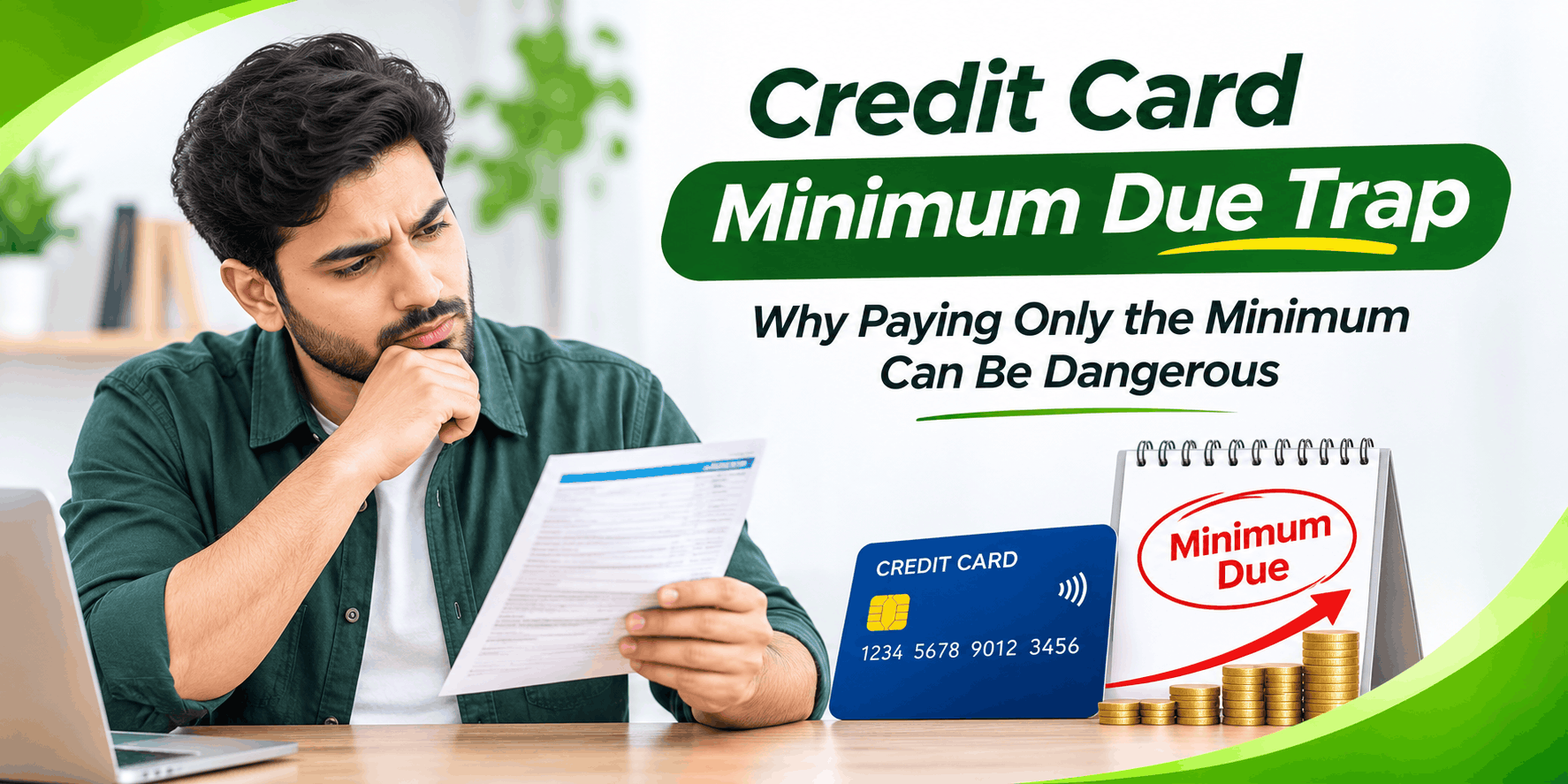
The Minimum Amount Due (MAD) is the minimum portion of a credit-card bill that the cardholder must pay by the due date to avoid the bill being treated as overdue under the applicable card terms.
Your statement generally shows:
- Total Amount Due
- Minimum Amount Due
- Payment Due Date
- Outstanding Balance
- Finance Charges
- Other applicable fees and taxes
Paying the minimum amount is not the same as repaying the entire credit-card bill.
Important: The minimum amount due is a payment requirement, not a recommended long-term repayment strategy.
2. Why Paying Only the Minimum Due Can Become Expensive
When you do not clear the total amount due by the payment deadline, the interest-free credit period may be suspended. Finance charges may apply to the outstanding balance according to your card's terms.
The problem becomes more serious when you continue making fresh purchases while carrying an existing balance.
Consider these possible consequences:
- The outstanding amount takes longer to repay.
- Finance charges continue to accumulate.
- New purchases may also attract interest under the applicable billing terms.
- Your available credit limit may reduce.
- Your monthly financial commitments become harder to manage.
RBI requires card issuers to disclose the Annualised Percentage Rate (APR), finance-charge calculation methodology and implications of minimum-only payments.
3. Example: How the Minimum Due Can Keep You in Debt
Suppose your credit-card statement shows:
|
Particulars |
Amount |
|
Total outstanding |
₹50,000 |
|
Minimum amount due |
₹2,500 |
|
Amount paid |
₹2,500 |
|
Remaining principal before applicable charges |
₹47,500 |
You may feel relieved because you have paid the minimum amount. However, most of the outstanding balance remains unpaid.
If the card's applicable finance charges continue, your next statement may show a substantial remaining balance.
The exact amount will depend on the interest rate, transaction dates, payment dates, refunds, charges and the issuer's calculation method.
This is why borrowers should not assume that paying a small minimum amount will quickly clear the credit-card debt.
4. What Happens If You Pay Only the Minimum Due Every Month?
Repeated minimum-only payments can create a long repayment cycle.
A. Your outstanding balance reduces slowly
A significant portion of your payment may go towards applicable finance charges and other amounts before the remaining amount reduces the principal.
B. You may lose the interest-free period
RBI's credit-card directions explain that the interest-free credit period is suspended when an earlier month's balance remains outstanding.
C. Your total repayment cost may increase
The longer the balance remains unpaid, the more finance charges may accumulate.
D. You may continue relying on the card
If you use the same card for everyday purchases while carrying a balance, the total amount owed can become difficult to control.
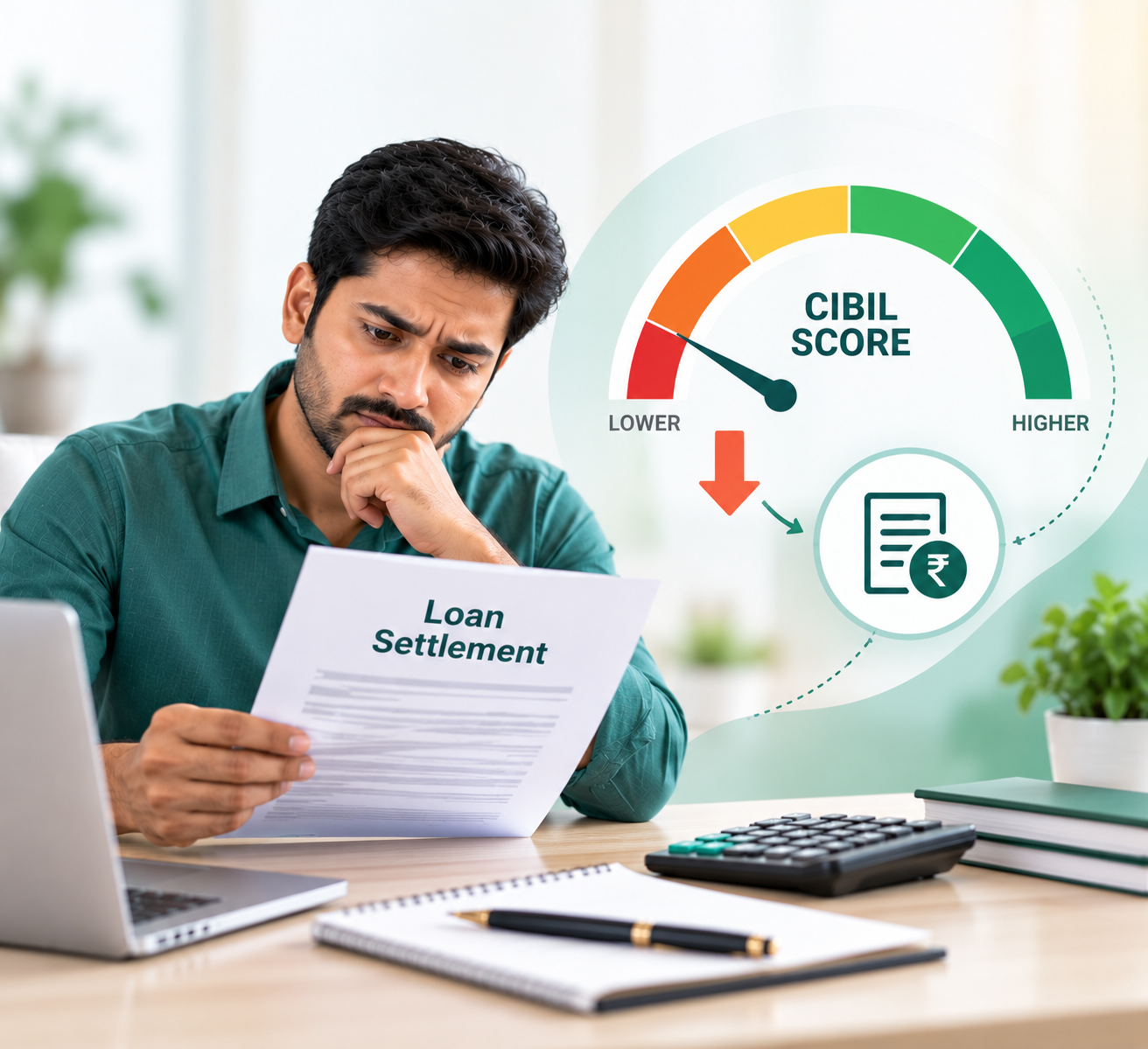
5. Does Paying the Minimum Amount Due Affect Your CIBIL Score?
Paying the minimum amount due by the applicable deadline may help prevent the bill from being treated as overdue, subject to the issuer's terms and payment processing.
However, this does not mean your credit profile is automatically unaffected in every situation.
Consider the following:
- If you pay the minimum amount on time, the remaining balance can still be reported as outstanding.
- High credit utilisation may influence your credit profile.
- If you fail to pay the minimum amount and the account becomes overdue, this may negatively affect your credit history.
- Repeated high balances may make lenders cautious when evaluating new credit applications.
Your CIBIL score is influenced by several factors, including repayment history and credit utilisation. No single payment behaviour guarantees a particular score.
6. Seven Warning Signs That Your Credit Card Debt Is Becoming Difficult to Manage
Watch for these signs:
- You pay only the minimum amount due every month.
- Your total outstanding balance is not reducing meaningfully.
- You use one credit card to pay another card's bill.
- You take personal loans to clear credit-card dues repeatedly.
- You have started missing payment deadlines.
- Your credit limit is frequently exhausted.
- You struggle to manage basic household expenses after paying card bills.
If several of these situations apply, review your complete financial position instead of focusing only on the next minimum payment.
7. How to Escape the Credit Card Minimum Due Trap
Step 1: Stop unnecessary card spending
Avoid adding new purchases to a card that already carries a large outstanding balance.
Step 2: Review your statement
Check the total outstanding, interest rate, fees, payment due date and applicable charges.
Step 3: Prepare a repayment budget
Calculate how much you can realistically pay after essential household expenses.
Step 4: Prioritise high-cost debt
If you have multiple credit obligations, review their interest rates and repayment costs. Directing additional money towards the highest-cost debt may reduce the overall interest burden, provided minimum obligations on other accounts are managed.
Step 5: Contact your card issuer
If you cannot clear the full balance, contact the issuer and ask whether an eligible repayment arrangement, EMI conversion or other facility is available.
Step 6: Evaluate other borrowing carefully
A balance transfer or consolidation loan may be worth evaluating only if its complete cost is lower and the new repayment is affordable.
Step 7: Consider settlement only after understanding the consequences
If repayment has become genuinely unmanageable, you may discuss a compromise settlement with the issuer. Approval is not guaranteed, and a settled status may negatively affect your credit profile.
8. What If You Cannot Pay Your Credit Card Bill?
Do not ignore the statement or wait until the outstanding amount becomes unmanageable.
Start by:
- Checking the total amount due.
- Understanding the interest and charges.
- Contacting the card issuer.
- Asking about available repayment options.
- Avoiding additional borrowing without comparing costs.
- Reviewing your CIBIL report for accurate account information.
If you have multiple cards and personal loans, consider reviewing all obligations together.
ReducedDebts helps borrowers understand credit-card settlement and debt-resolution options, depending on their individual circumstances.
Conclusion
The minimum amount due can provide short-term payment flexibility, but repeatedly relying on it can make credit-card debt harder and more expensive to repay.
If your outstanding balance is increasing, take action early. Understand the charges, review your budget and contact your card issuer to explore available repayment options.
ReducedDebts helps borrowers understand credit-card settlement and debt-resolution options in India.
Disclaimer: This article is for general educational purposes and is not financial or legal advice. Credit-card charges and repayment options depend on the card issuer's terms. Any settlement remains subject to issuer approval and may negatively affect your credit profile. ReducedDebts is not a lender or a law firm.