
What Is Credit Card Debt Settlement?
Credit card debt settlement is an arrangement in which a cardholder and the issuing bank or financial institution agree to resolve an outstanding credit card debt under specific terms.
In some cases, the issuer may agree to accept a negotiated amount instead of the entire outstanding balance. This is commonly referred to as a compromise settlement.
Settlement is not automatic. The card issuer evaluates the borrower's circumstances and decides whether to approve the proposal.
When Should You Consider Credit Card Debt Settlement?
A borrower may consider discussing settlement options when regular credit card payments have become unaffordable due to circumstances such as:
- Loss of employment or reduced income.
- Unexpected medical or family expenses.
- Multiple credit card balances.
- Long-standing payment difficulties.
- Accumulating interest and overdue charges.
- Inability to meet minimum payment obligations.
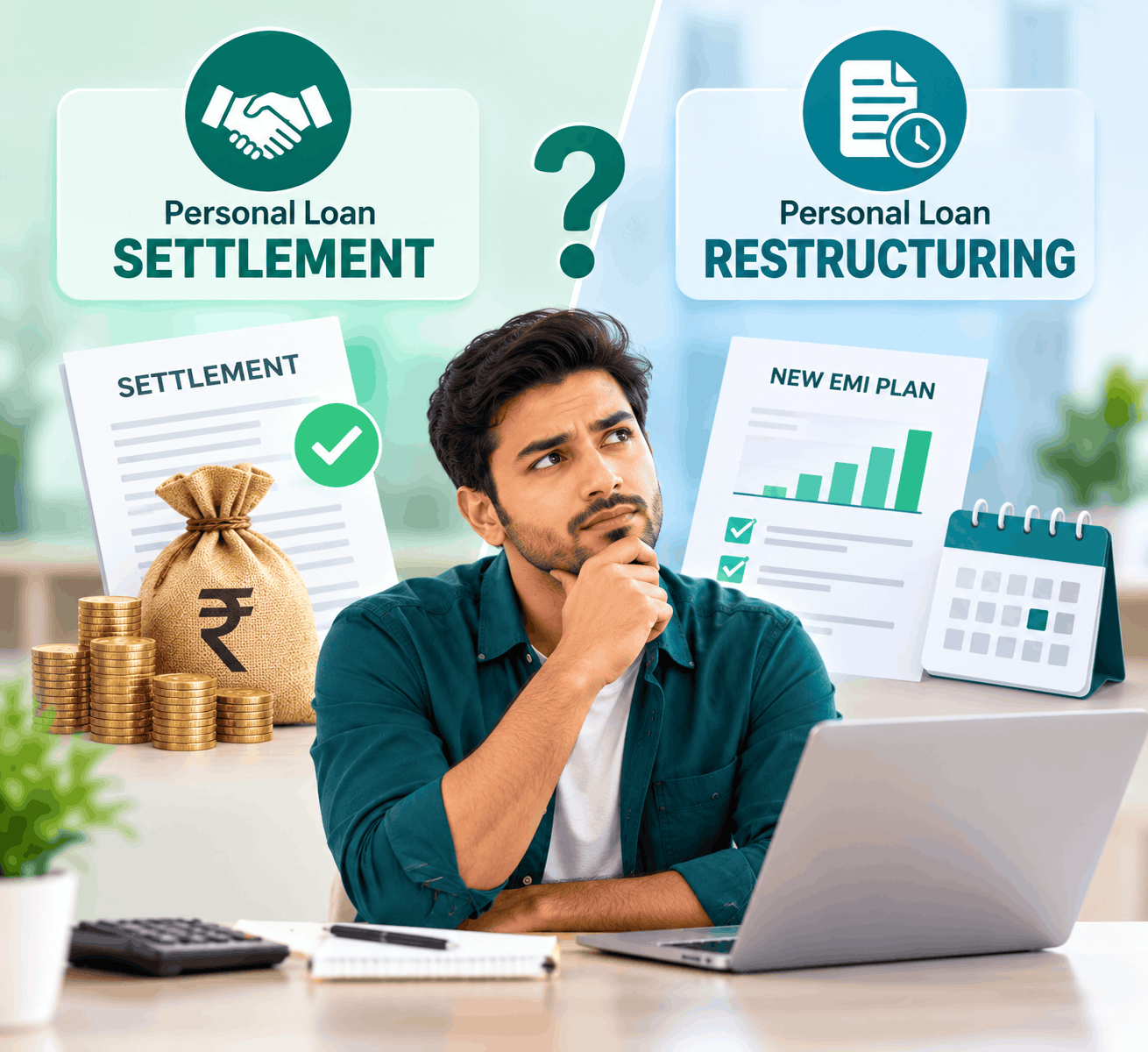
Before considering settlement, review whether you can manage the balance through a repayment plan, restructuring or another arrangement offered by the issuer.
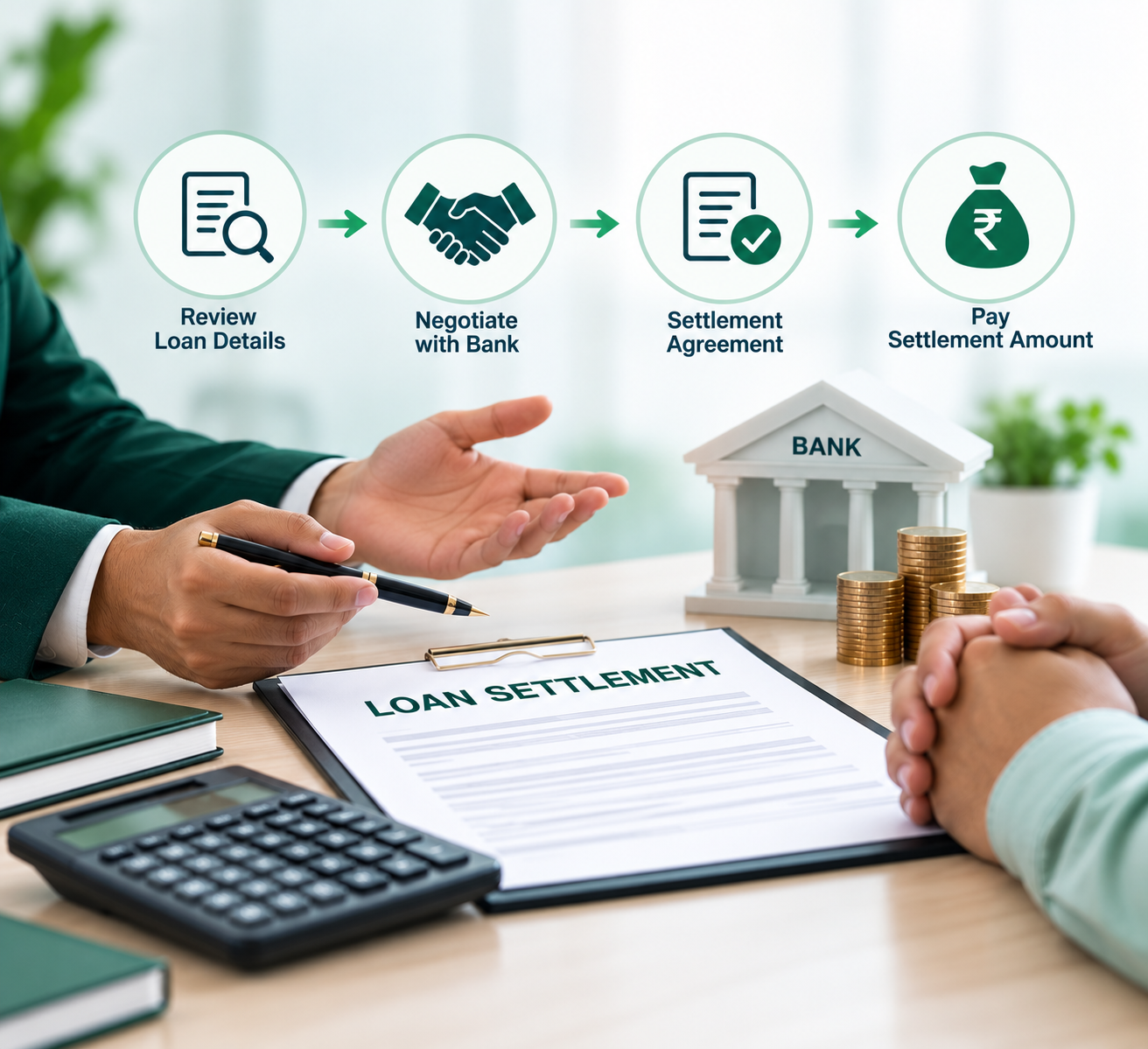
Credit Card Debt Settlement Process in India
Understanding the process helps borrowers avoid unrealistic promises and make informed decisions.
Step 1: Review your credit card dues
Collect your latest credit card statements and check:
- Total outstanding balance.
- Minimum amount due.
- Overdue payments.
- Interest and applicable charges.
- Any disputed transactions.
If there are multiple credit cards, prepare a separate statement for each issuer.
Step 2: Assess your repayment capacity
Calculate your monthly income and essential expenses. Identify how much you can realistically allocate towards resolving your outstanding dues without compromising essential financial responsibilities.
Step 3: Explore available options
Depending on the circumstances, possible options may include:
- Paying the outstanding balance.
- Discussing a repayment arrangement.
- Exploring eligible restructuring options.
- Requesting a compromise settlement.
Settlement should be evaluated alongside other available alternatives.
Step 4: Contact the card issuer
Communicate with the bank or its authorised representative about your financial circumstances. Explain why you are facing difficulty and ask what resolution options may be available.
Step 5: Review the settlement proposal
If the issuer offers a settlement, carefully examine the written terms.
Check the agreed amount, payment deadline, payment method, account status and any conditions that apply after payment.
Step 6: Make payment through an authorised channel
Pay only using a verified payment channel authorised by the issuer. Keep the transaction receipt and settlement communication.
Step 7: Obtain written confirmation
After completing the agreed payment, request confirmation from the issuer. Check your credit report later to verify that the account status and outstanding balance have been reported accurately.
Can Credit Card Debt Be Settled for Less Than the Outstanding Amount?
A lender may consider accepting a negotiated amount under a compromise settlement. However, there is no fixed settlement percentage that applies to every borrower.
The decision may depend on:
- Outstanding dues and account history.
- Borrower's documented financial circumstances.
- The issuer's internal policies.
- Applicable regulatory requirements.
- The lender's commercial assessment.
Be cautious of anyone promising a guaranteed settlement percentage before reviewing your case.
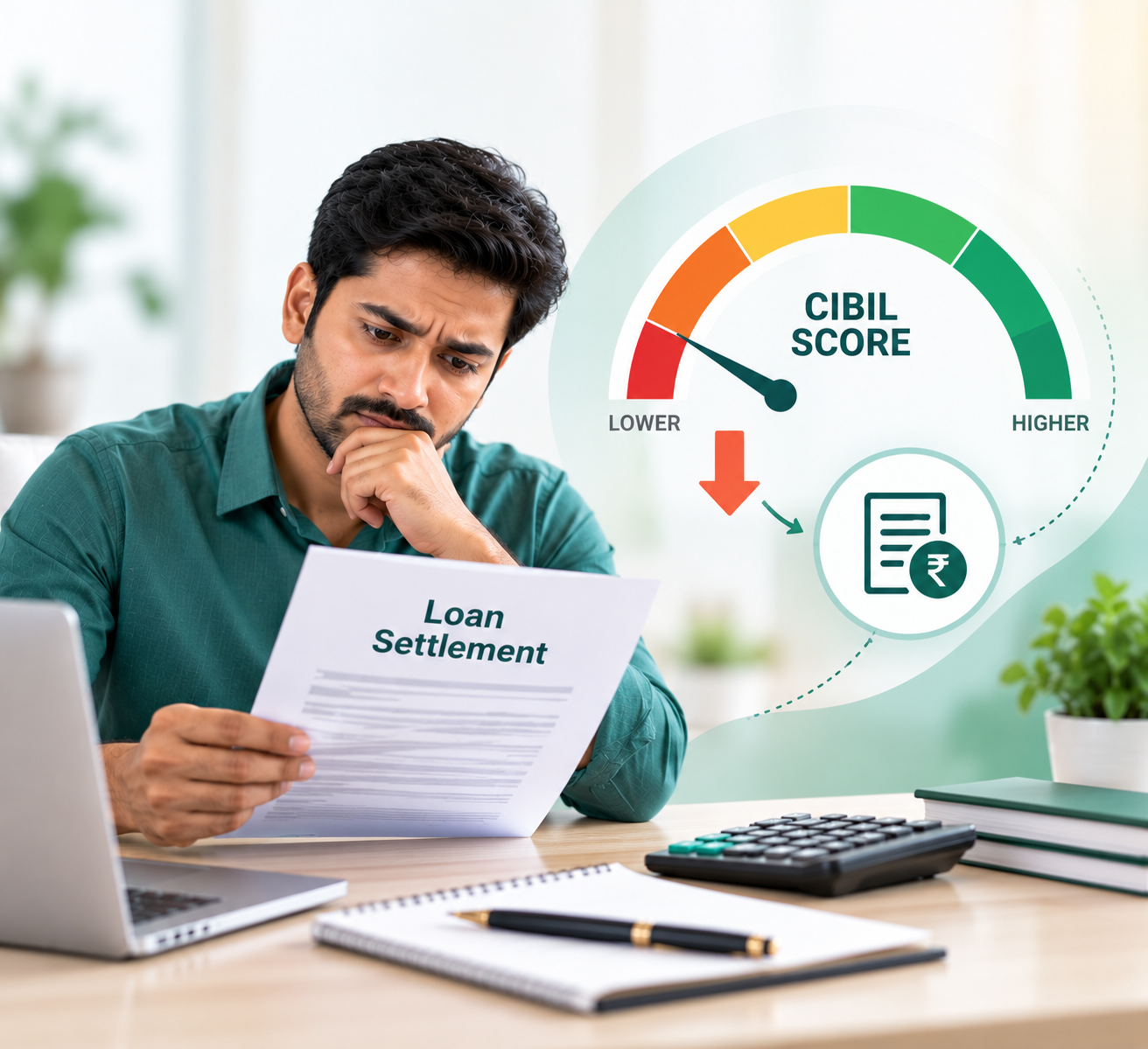
Does Credit Card Debt Settlement Affect Your CIBIL Score?
Yes, credit card debt settlement can negatively affect your credit history.
When a lender accepts less than the full contractual amount, the account may be reported as "settled" rather than "closed". These statuses are not equivalent.
A settled account can influence how future lenders assess your creditworthiness. The actual impact depends on your overall credit profile and reporting information.
Before proceeding, understand the possible consequences for future credit card applications, personal loans and other borrowing requirements.
What Is the Difference Between Settled and Closed Credit Card Accounts?
|
Settled account |
Closed account |
|
Lender accepts an agreed amount to resolve the dues |
Outstanding contractual dues are fully paid |
|
May be reported as "settled" |
May be reported as "closed" |
|
Can negatively affect credit history |
Generally reflects full repayment |
|
Future lenders may view settlement as a repayment concern |
Usually represents a more favourable repayment outcome |
Always verify the account status reported by the issuer after payment.
Is Credit Card Debt Settlement Legal in India?
Compromise settlements are recognised within the RBI's regulatory framework for regulated lending institutions.
The RBI's Framework for Compromise Settlements and Technical Write-offs, dated 8 June 2023, recognises compromise settlements as a valid resolution mechanism. The lender must follow its applicable policies and approval procedures.
However, a borrower cannot force a card issuer to approve a settlement. The decision remains with the lender.
What Should You Check Before Choosing a Credit Card Debt Settlement Consultant?
If you are considering professional assistance, evaluate the service carefully.
Check whether the consultant:
- Explains the process and its limitations.
- Clearly discloses consultation and service fees.
- Avoids guaranteeing settlement approval.
- Explains possible credit-reporting consequences.
- Provides written documentation of its role and services.
- Advises payment only through verified issuer-authorised channels.
Never share OTPs, passwords or confidential banking credentials with a consultant.
How ReducedDebts Can Help
ReducedDebts helps borrowers understand their outstanding credit card dues and explore possible debt resolution options.
If you are dealing with overdue credit card payments or multiple outstanding balances, understanding your financial situation is an important first step.
You can explore our:
- Credit Card Settlement services.
- Personal Loan Settlement services.
- Loan Settlement services.
- Debt Solutions.
Contact ReducedDebts to discuss your financial difficulties and understand the possible next steps.